%20(1)-B86R08ZzwhPzS6UZbG3mSxRWPCwGwn.png)



Teams buy a link building platform for the wrong reason. They assume the tool will create the process, when the bottleneck is usually earlier, no prospect list, no pitch framework, no reply tracking, or no way to tell whether a placement mattered. That's why link stacks break before outreach even starts.
The useful way to compare tools is by job, not by brand. Prospecting tools solve discovery, outreach tools solve volume and follow-up, monitoring tools solve attribution, and managed-placement platforms solve budget-to-output efficiency when you'd rather buy editorial access than run a full in-house workflow. Once you know where your pipeline stalls, the right platform becomes obvious, and so does the category you should skip.
Table of Contents
- 1. SemDash
- 2. Pitchbox
- 3. BuzzStream
- 4. Semrush Link Building Tool
- 5. Respona
- 6. Connectively
- 7. Qwoted
- 8. WhitePress
- 9. Getfluence
- 10. Mailshake
- Top 10 Link-Building Platforms Comparison
- Choosing Your Stack Before Your Next Outreach Sprint
1. SemDash
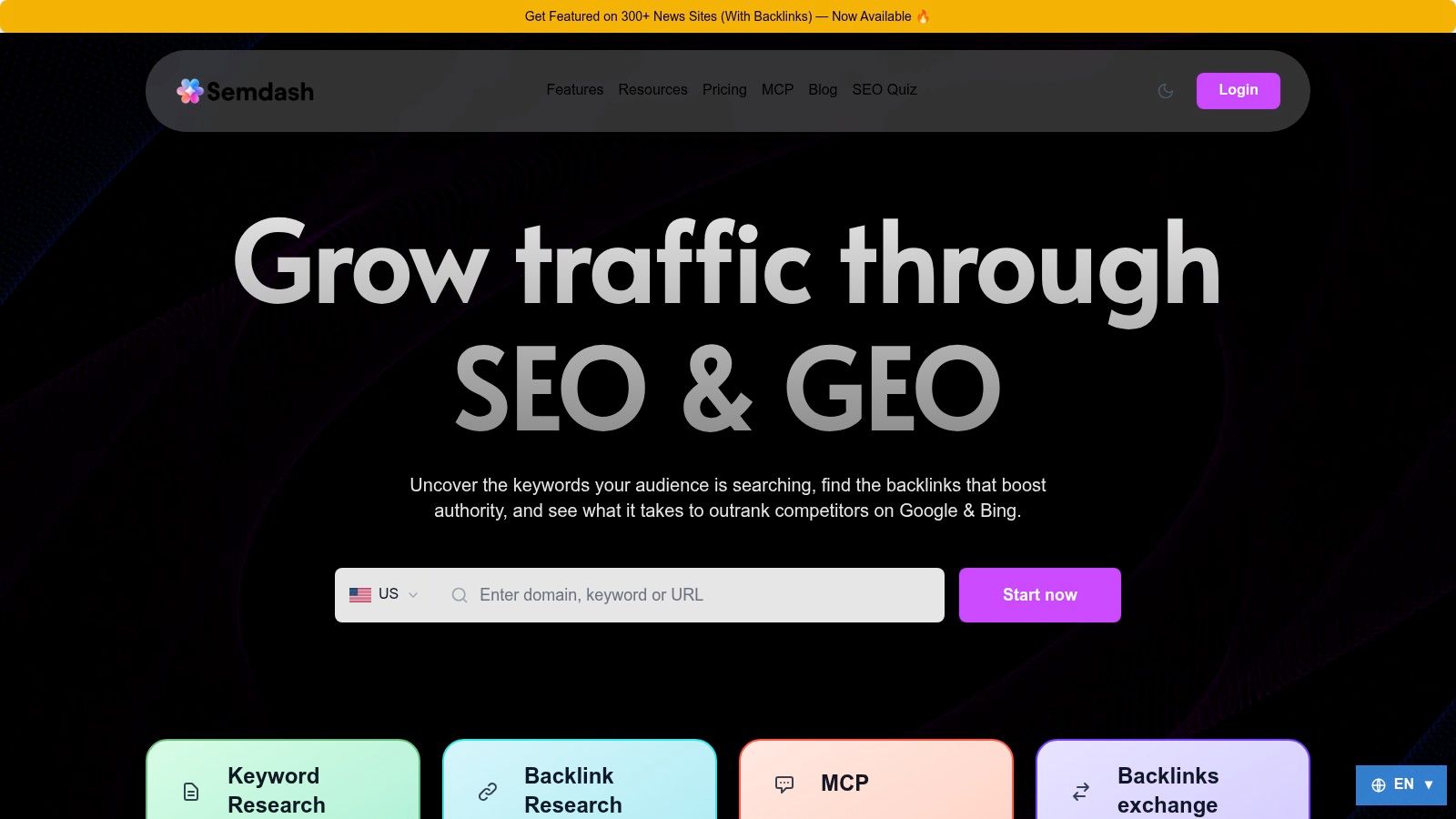
SemDash earns its place before outreach begins. I use it when prospecting, competitor research, or link-gap discovery is slowing the campaign, because it exposes the pages and domains behind an opportunity rather than producing another unprioritized list. You can see which URLs rank for a query, match keyword intent to the page that should earn the link, and identify domains linking to competitors but not to your site. That gives outreach a reason to exist before anyone writes an email.
Where it earns its cost
The main advantage is research speed. SemDash brings backlink research, backlink-gap analysis, unlinked-mention detection, broken-backlink recovery, keyword clustering, PAA and PASF suggestions, and 12-month SERP history into one workspace. That reduces the tab switching and manual comparison that can make target-list building expensive for a small team.
Its AI Overviews visibility is useful for teams evaluating links beyond traditional rankings. Pew Research found that users clicked a traditional result in only 8% of searches when an AI Overview appeared, compared with 15% without one, while source links inside the overview received clicks in only 1% of searches (Pew Research). The practical implication is to assess a link for authority, referral potential, and inclusion as a cited source, rather than treating every placement as one ranking input.
Practical rule: if a platform cannot show the page-level target, the likely link source, and why that source matters, it is only half a link building platform.
Best fit and trade-offs
SemDash suits consultants, agencies, small teams, and in-house SEOs that need substantial research without enterprise overhead. Its clean interface and multilingual support help distribute research across a team, while the free tier gives smaller operators room to test the workflow before committing budget.
The trade-off is clear: SemDash is not a full outreach CRM. Teams with an established pitching and follow-up system can use it as the research and prioritization layer, then send qualified opportunities into their existing process. Teams starting from scratch should pair it with an outreach tool. Use link-gap, mention, and recovery findings to create the queue, instead of building one manually. The guide on how to get backlinks with SemDash shows that workflow in practice.
2. Pitchbox
Pitchbox makes sense when outreach volume is the bottleneck and the team already knows what it wants to pitch. It's built for link acquisition and digital PR workflows, so the value isn't discovery for discovery's sake, it's turning a researched prospect into a sequenced, trackable conversation. If you've ever watched a spreadsheet-based campaign collapse under reply chaos, this is the category that fixes that mess.
What works in real campaigns
The strongest part of Pitchbox is that it keeps the whole workflow inside one system, prospecting, contact discovery, verification, personalization, sequencing, reply handling, CRM, and link monitoring. That reduces tool fragmentation, which is a bigger problem than teams admit. In practice, it helps when your team is running multiple campaigns and needs deliverability safeguards, workspaces, and reporting that don't fall apart once the prospect count grows. Its AI Campaign Assistant and AI Reply Agent are useful when the process is already defined, because they speed up execution without replacing judgment.
Where it falls short
Pitchbox is not the cheapest way to send email at scale, and that matters. Costs rise quickly when monthly volume climbs, so I only recommend it to teams that can meet the system discipline it demands. If your prospect list is weak, no automation layer will rescue the campaign, and that's where people waste money by buying the most complete-looking stack instead of the right one.
The cleanest Pitchbox setup I've seen starts with qualified prospects from a research tool, then uses Pitchbox to handle sequence logic, reminders, and response routing. That order matters.
Pitchbox is best for agencies and in-house teams that already have a content offer, a pitch angle, and enough throughput to justify a specialized outreach platform. If you're still defining your process, it can feel like overkill. If your process is already working and you just need scale, it's hard to beat for link-specific workflow control.
Website: Pitchbox
3. BuzzStream
BuzzStream is the tool I think of when a team wants a mature outreach CRM without paying for more automation than it can operationally support. It's less flashy than newer platforms, but that's part of the appeal. It handles prospect research, contact discovery, personalized sequences, automated follow-ups, and placement tracking in a way that feels built for real account management, not marketing theater.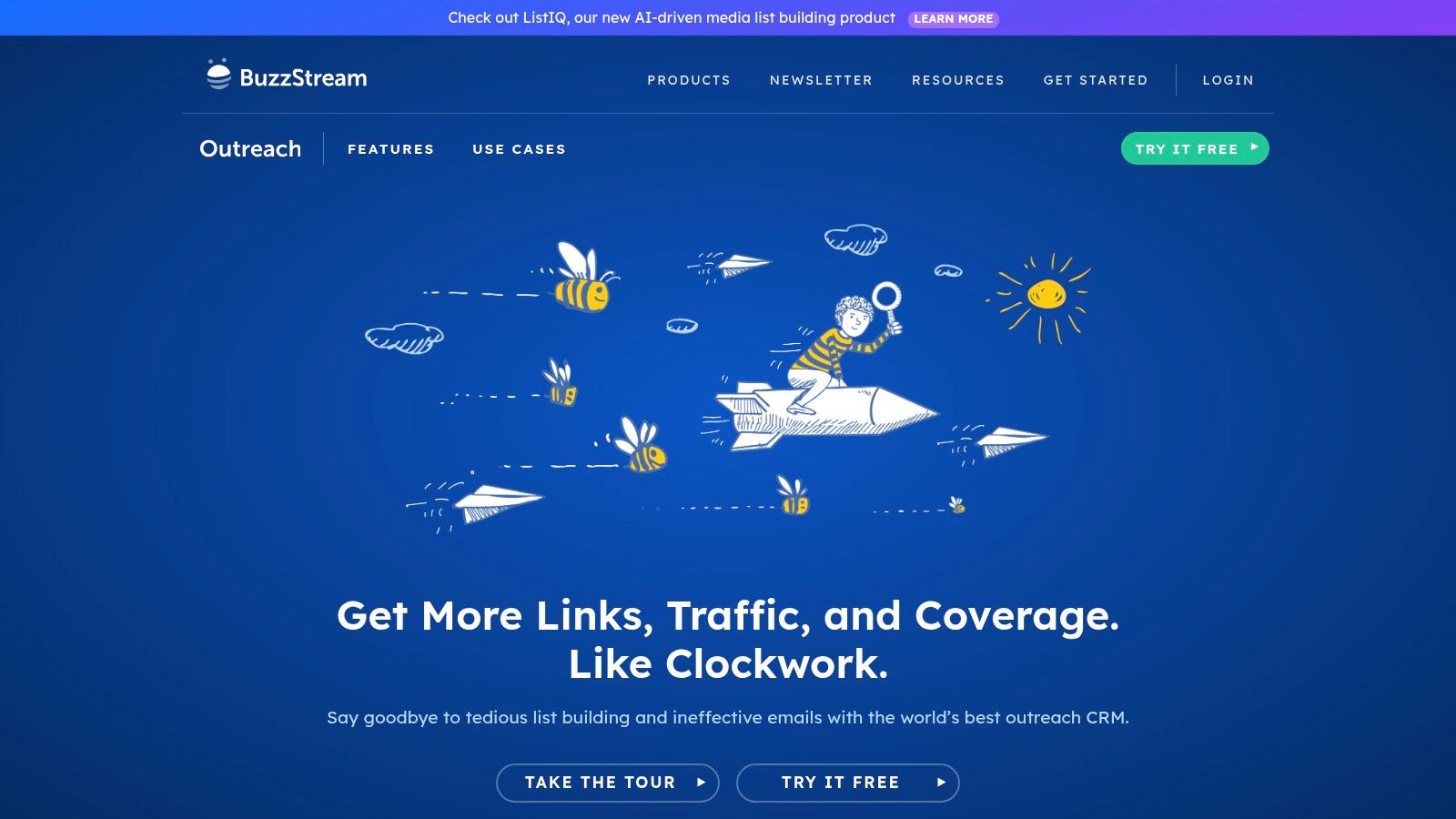
Why teams keep it around
BuzzStream's strongest case is multi-user efficiency. The platform is generally a better fit than newer AI-heavy tools when you need clear usage controls, contact limits, and a workflow your team can maintain. I also like that it doesn't pretend prospecting should be fully magical, because in link building, a lot of the value still comes from careful list building and good account hygiene. Higher tiers add link monitoring and reporting, plus Ahrefs integration, which helps when you want research and outreach to stay connected.
The real compromise
The compromise is obvious once you've used more automated systems. BuzzStream is solid, but it's not the quickest route if you want AI-assisted prospecting, heavy enrichment, or advanced personalization at scale. Advanced reporting and API access sit higher up the stack, so budget-conscious teams need to watch how fast the spend expands as more users join. The optional ListIQ add-on can help with journalist and contact list building, but it's still a platform that rewards teams that already know how they like to work.
I'd choose BuzzStream when the team needs a reliable system of record for outreach and placements, not a flashy prospecting engine. It's especially sensible for agencies that care about consistency across accounts more than they care about cutting-edge automation. Website: BuzzStream
4. Semrush Link Building Tool
Semrush's Link Building Tool earns its place when a team wants prospecting, outreach, backlink analysis, and audits in one SEO suite. It is less compelling as a dedicated outreach system than as an extension of an existing Semrush workflow. Smaller SEO teams and generalist marketers can gain efficiency from keeping research, execution, and reporting together.
A useful comparison is Grou's toolkit for Semrush, especially when deciding how much of the SEO stack should remain inside one platform.
Best use case
Use this tool when research and reporting carry more weight than advanced outreach automation. You can build prospect lists from keywords and competitors, manage outreach in the application, and connect campaigns with Backlink Analytics and Backlink Audit inside Projects. That setup suits teams that want one working environment instead of separate tools for discovery, execution, and tracking.
If your SEO program already lives inside Semrush, the Link Building Tool is a practical extension rather than a separate system to train on. For a wider comparison of outreach software, see this guide to SEO tools for link building.
Where it lags specialist tools
The trade-off is outreach depth. Dedicated link acquisition platforms usually offer stronger contact management, personalization, and campaign controls. Semrush can cover the workflow, but high-volume outreach teams may outgrow its execution features.
Cost also requires scrutiny. Teams may expect suite consolidation to reduce spending, then find that extra seats and add-ons create layered pricing. That convenience can still make sense when backlink work sits inside a broader SEO program, but it is harder to justify for a standalone link acquisition team.
I would choose Semrush for a small or midsize SEO function consolidating research, content planning, and backlink tracking. Teams running intensive personalized outreach should pair it with a specialist CRM rather than treating it as the complete acquisition system.
Website: Semrush
5. Respona
Respona is the most obvious choice when you want to buy outcomes instead of building the whole outreach team yourself. It sits in the middle of software and managed service, which makes it attractive for B2B and SaaS teams that want pay-per-result style link acquisition without standing up a full prospecting and negotiation operation.
Why the pricing model matters
The appeal is clarity. Fixed per-placement pricing tied to DR and traffic tiers gives you a cleaner budget conversation than an open-ended retainer. That matters when you need to forecast what a campaign will cost before you commit content resources or internal approvals. The relationship-driven workflow is also useful for editorial mentions and listicle placements, because it aligns with the kind of links many teams want, not just any link with a decent metric attached.
What you give up
You do give up control. Managed or semi-managed programs reduce the amount of in-house bandwidth you need, but they also limit how much you can steer each pitch, each domain, and each negotiation. That trade-off is fine when you trust the provider and want throughput, but it's frustrating if you want granular control over anchor text, page selection, or niche nuance. Availability can also vary by niche, so the model works best when your targets fit the provider's operating lane.
My rule with Respona is simple, use it when the team wants predictable output and doesn't want to run every step internally. Skip it if your link strategy depends on very specific editorial judgment or if you need to direct each placement with precision.
Website: Respona
6. Connectively
Connectively is for teams that want media-earned links instead of purely outreach-driven placements. It works as a real-time journalist and source request marketplace, which makes it a different kind of link building platform altogether. You're not pitching random publishers, you're responding to active requests, and that changes the economics of the work.
Why it still works
The biggest advantage is timing. When a journalist posts a relevant query and you can answer quickly with a credible, specific response, the path to coverage is shorter than most cold campaigns. The filtering and keyword alerts help you stay close to topics where your expertise is relevant, which is vital because speed and fit matter more here than in most outreach systems. For teams with subject-matter depth, the compounding value comes from building a pattern of useful responses, not from one-off wins.
What to watch
The downside is competition. Everyone in the marketplace sees the same request pool, so your answer has to be sharp, relevant, and fast. Coverage is never guaranteed, and neither are links, which means this is a good fit for teams that can treat it as one input into a broader digital PR program rather than a dependable link factory. Seat-based pricing can be attractive at the entry point, but the value comes from whether your team can maintain consistent response quality.
I'd pick Connectively when I want authority signals, founder visibility, or media mentions to support the link strategy. It's strongest for brands that have something real to say and can answer like insiders.
Website: Connectively
7. Qwoted
Qwoted feels like the more structured sibling in the journalist-expert network category. It gives PRs and subject-matter experts real-time alerts, a built-in pitching workflow, and analytics, which makes it useful for teams that want to turn media requests into a repeatable acquisition channel rather than a one-off scramble.
Why I'd use it
The workflow is built for speed without turning the process into chaos. Pitch Intelligence helps with targeting, and the events and awards database adds another layer for brand visibility work that can support links indirectly. For solo PRs and small agencies, that matters because you don't always have time to juggle three tools just to keep track of opportunities. Team and workspace features also make it easier to collaborate when more than one person is pitching.
Limits to keep in mind
The output varies by niche, and that's the hard truth with every journalist-request platform. If your subject area is crowded or not especially newsworthy, response quality can be inconsistent. Larger teams also need to factor in custom pricing or enterprise-level sales motion, which can change the economics quickly once you move beyond a small seat count. If your program needs steady digital PR link acquisition as part of a content calendar, Qwoted is a practical fit. If you want guaranteed placements, it's the wrong expectation.
Use Qwoted for earned attention, not for guaranteed inventory. That mindset prevents a lot of disappointment.
Website: Qwoted
8. WhitePress
WhitePress is the platform I'd look at when sponsored content and link insertions need to be bought with more structure than a loose marketplace usually offers. It's built around publisher offers, set pricing, ordering workflows, and budget management, which makes it easier to scale if your team likes transparency.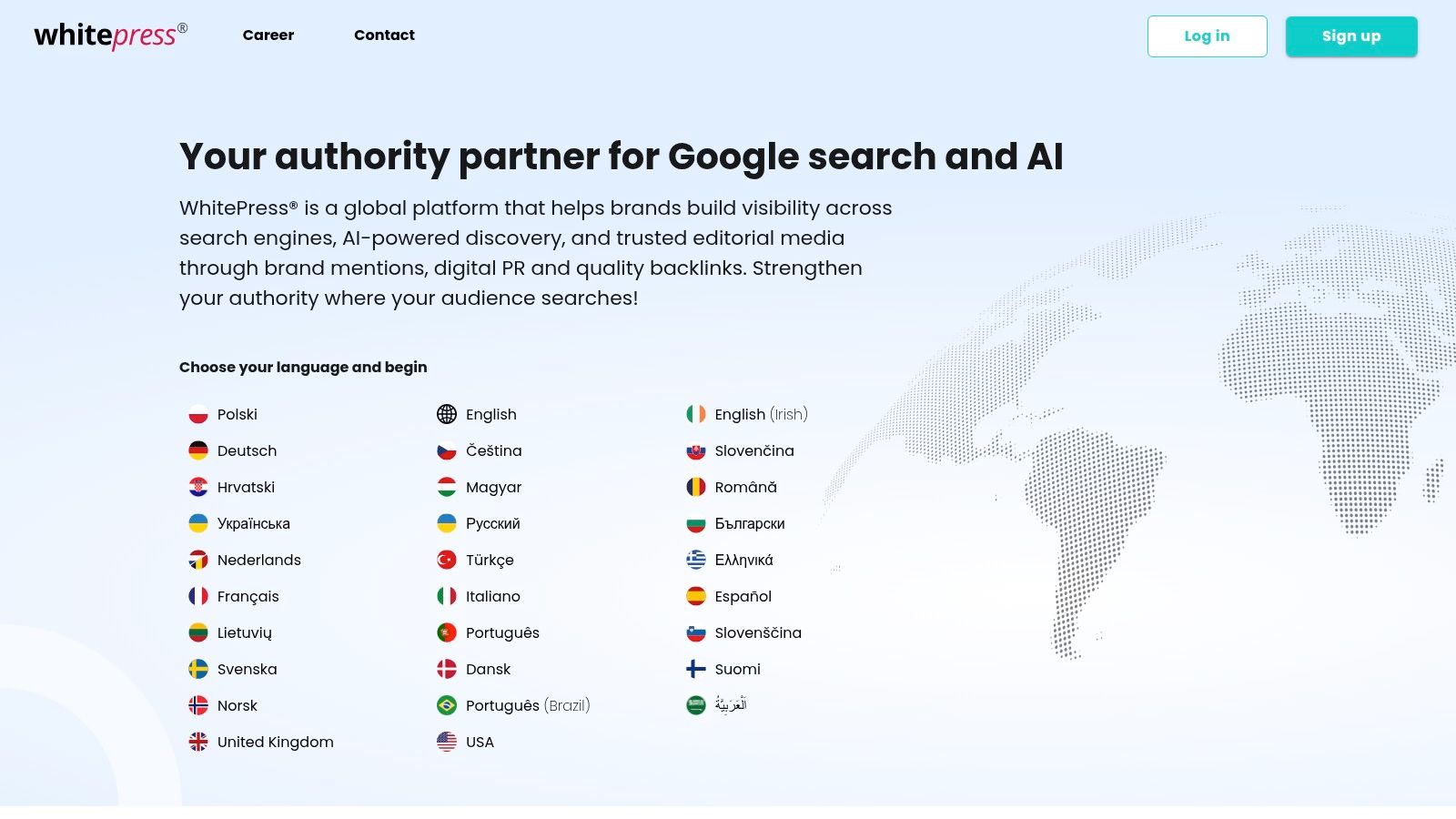
Why it's useful
The filtering is the advantage. You can evaluate offers by allowed linking type, conditions, and, on select listings, traffic guarantees. That helps when you need to separate stronger inventory from low-value placements without spending hours in inbox negotiation. The workflow also makes it easier to manage international campaigns, which matters if your client mix spans multiple markets and languages.
The catch
The catch is the same one that applies to all marketplaces. Publisher quality varies, and you still need to vet relevance, audience fit, and editorial standards before you buy. Sponsored content also needs disclosure, and the link handling should follow rel attribute expectations, so this is not the place to cut corners on compliance. WhitePress works best for teams that want scale and operational clarity, but are willing to do quality control on top of the marketplace convenience.
I'd use it when I need controlled acquisition across markets, not when I'm trying to build a hyper-custom, relationship-led campaign. It's strong for programmatic buying, less so for bespoke outreach.
Website: WhitePress
9. Getfluence
Getfluence is built for teams that want a broad publisher catalog without losing the ability to inspect individual opportunities. The platform connects brands and agencies with a large publisher base, and that makes it useful when the main challenge is finding enough relevant placements without turning the process into manual vendor chasing.
What makes it appealing
The transparency is the main draw. Publisher pages include metrics, availability, and pricing, which makes it easier to compare options without leaving the platform. That's especially helpful if you're running branded content, link programs, or visibility campaigns in multiple markets. The free-to-explore model also lowers the barrier when you're still evaluating whether the inventory matches your niche. Managed programs through Getfluence+ add another layer for agencies that want help scaling execution.
What you need to manage internally
You still need internal QA. Broad inventory is useful, but broad inventory also means commercial sites, mixed editorial standards, and uneven topical fit if you don't filter carefully. I'd treat it as a sourcing layer, not a replacement for judgement. The best results come when a team knows its acceptable site types and refuses to buy placements just because the checkout flow is easy.
Getfluence is strongest for organizations that want to scale publisher buying across geographies and keep the process visible. If you only need a few carefully chosen placements, it may be more platform than you need.
Website: Getfluence
10. Mailshake
Mailshake is a practical outreach engine for teams that already have a prospect list. It deliberately leaves discovery to research tools, and that focus makes it a strong sender for lean teams. The platform handles cold email, follow-ups, and reply management without asking a small marketing operation to buy a larger SEO suite.
Why it works for lean teams
Its link-building templates cover broken-link, guest-post, and resource outreach. They provide a workable starting point, while deliverability controls, A/B testing, a unified inbox, and campaign analytics support day-to-day execution. For a small agency or in-house team with a limited outreach budget, that combination can cost less than an all-in-one platform.
Pull prospects from SemDash, BuzzStream, or another research source, then use Mailshake to run the sequence. Just make sure the agency or specialist running the send meets solid best Instagram growth agency selection criteria before you plug it into Mailshake.
What it cannot do
Mailshake has no native prospect discovery or backlink index, so research remains a separate task. That division matters for buyers who expect one platform to identify sites, evaluate links, and contact publishers. A stronger setup pairs a research tool with Mailshake for delivery, inbox placement, follow-ups, and reply handling.
Optional data tools and ready-to-use mailboxes can support execution, but they do not turn Mailshake into a discovery system. Choose it when sending and managing replies are the bottleneck. Choose another platform, or add a research layer, when list building is the harder job.
Website: Mailshake
Top 10 Link-Building Platforms Comparison
| Tool | Core features | Standout ✨ | Target audience 👥 | Pricing / Value 💰 | UX / Quality ★ |
|---|---|---|---|---|---|
| SemDash 🏆 | 6.6B keyword DB, 2.7T backlinks, SERP history, AI briefs, URL-level mapping | ✨ URL-level mapping; AI Overviews (AI answers citation); huge live indexes | 👥 SEOs, content marketers, agencies, growth teams, solopreneurs | 💰 Free tier + trial; competitive / budget-friendly | ★★★★☆ |
| Pitchbox | Outreach automation, prospecting, email finder, sequencing, link monitoring | ✨ AI personalization & reply agents for high-volume outreach | 👥 Agencies & in-house outreach teams at scale | 💰 Costly as email volumes grow | ★★★★ |
| BuzzStream | Outreach CRM, contact discovery, automated follow-ups, link monitoring | ✨ Streamlined CRM + clear usage controls | 👥 Agencies and multi-user teams on budget | 💰 Cost-efficient multi-user plans | ★★★★ |
| Semrush (Link Building Tool) | Prospecting by competitors/keywords, in-app outreach, Backlink Analytics integration | ✨ Single-suite workflow + rich add-on ecosystem | 👥 Teams using full SEO suites, agencies | 💰 Can be expensive once add-ons/seats added | ★★★★ |
| Respona | Managed outreach + software backbone, per-placement pricing by DR/traffic | ✨ Pay-per-result managed placements (transparent per-link tiers) | 👥 B2B/SaaS teams, companies wanting turnkey link buys | 💰 Pay-per-placement (predictable cost) | ★★★★ |
| Connectively | Real-time journalist/source requests, keyword alerts, tracking | ✨ HARO successor with real-time filtering & seat plans | 👥 PRs, experts, small agencies for digital PR | 💰 Low entry cost; ROI varies by response quality | ★★★ |
| Qwoted | Journalist–expert network, real-time alerts, Pitch Intelligence, analytics | ✨ Built-in pitching + pitch intelligence for steady PR | 👥 Solo PRs, SMEs, agencies doing regular PR | 💰 Moderate; team/custom pricing at scale | ★★★ |
| WhitePress | Marketplace for sponsored articles/link insertions, publisher offers, targeting | ✨ Publisher-set pricing + filters (guaranteed traffic on some offers) | 👥 Agencies, brands doing programmatic link buys | 💰 Transparent per-publication pricing | ★★★ |
| Getfluence | Publisher marketplace (70k+), catalog browsing, pay-per-placement, managed option | ✨ Large curated publisher supply + managed programs | 👥 Brands/agencies scaling sponsored content | 💰 Pay-per-placement; variable by publisher | ★★★ |
| Mailshake | Cold email & outreach automation, link-building templates, deliverability tools | ✨ Affordable sender with warm-up/rotation & A/B testing | 👥 Small teams, solo SEOs using external prospect lists | 💰 Budget-friendly entry pricing | ★★★★ |
Choosing Your Stack Before Your Next Outreach Sprint
The cleanest way to choose a link building platform is to start with the bottleneck, not the logo. If prospecting is broken, a research tool like SemDash belongs first. If the team already has targets and just can't keep up with reply handling or sequencing, a specialist outreach CRM like Pitchbox or BuzzStream makes more sense. If monitoring and attribution are the gap, keep the workflow tied to backlink tracking and reporting. If the budget is better spent on placements than on staffing, marketplace and managed-service tools are the right category to test.
The mistakes are predictable. Teams underestimate how fast per-email costs rise when volume climbs, then realize the outreach tool is only cheap at low scale. They also overbuy managed services, then find they've traded away too much control over page selection, anchor fit, or editorial nuance. The smarter move is to run a small pilot, one prospecting tool, one outreach sender, one reporting path, and one placement channel, then compare the result against the bottleneck you're trying to fix.
I'd also keep Google's link-spam rules in mind when I review any placement. Google defines link spam as links created primarily to manipulate rankings, and it explicitly says paid links should use rel="sponsored" or rel="nofollow" when they're advertising rather than ranking manipulation (Google Search Central). That policy line is useful because it keeps the buying decision honest before the campaign starts.
If you want a practical first step this week, pick one active campaign and map every stage from prospect discovery to live-link verification. Then decide which single tool category is causing the most friction, and pilot that category before you commit to annual seats or add-ons. For a broader workflow comparison, I'd also look at find the right sales automation to see how your outreach stack fits into the rest of your go-to-market system.
SemDash gives you the research layer most link building stacks are missing, from backlink gaps and unlinked mentions to URL-level keyword mapping and AI Overview visibility. If your workflow needs better prospecting before outreach even starts, visit SemDash and see how it fits into your link building platform stack.