%20(1)-B86R08ZzwhPzS6UZbG3mSxRWPCwGwn.png)


The biggest index isn't always the best choice. A headline backlink count can look impressive while telling you very little about whether a link is relevant, editorial, still live, or worth pursuing. The practical test for backlink analysis software is harder: can it help you verify link quality, discover realistic referring-domain gaps, interpret anchor patterns, recover broken links, and turn those findings into prioritized outreach or content work?
I compare these platforms against the workflows that decide whether backlink data becomes useful action: index coverage and freshness, page-level context, referring-domain discovery, competitor gaps, anchor interpretation, recovery work, export limits, and team fit. I also look at whether a tool connects backlink research to the ranking URLs, keyword gaps, SERP history, content planning, and AI Overviews visibility that shape the broader campaign.
That matters because backlink analysis has moved beyond a current snapshot. Majestic's Historic Index data illustrates the scale of modern crawling, with records extending back to 2006 and multi-trillion-URL datasets. For most teams, though, the winning platform isn't the one with the largest database. It's the one that helps you decide what to do next without exporting half the workflow into spreadsheets.
Table of Contents
- 1. SemDash
- 2. Ahrefs
- 3. Semrush
- 4. Majestic
- 5. Moz Pro Link Explorer
- 6. SE Ranking
- 7. Serpstat
- 8. Mangools LinkMiner
- 9. SISTRIX Link Module
- 10. LinkResearchTools
- Top 10 Backlink Analysis Tools Comparison
- Choose the Workflow You Will Actually Run
1. SemDash
SemDash is the strongest fit when backlink research needs to sit beside competitive keyword research and content planning. Its workspace combines a 2.7 trillion-link index, 6.6 billion Google keywords, and 600 million SERPs, figures published in the product's research materials. Those datasets matter because the platform maps keywords to the exact URLs ranking for them, rather than leaving you with a domain-level list that still needs manual investigation.
Where SemDash turns links into actions
I'd use SemDash to start with a competitor's top pages, inspect the keywords and SERP history attached to each URL, then open the backlink profile for the page itself. That sequence answers a more useful question than “How many links does this domain have?” It shows which page earns visibility, which domains link to that page, what anchors appear around those links, and whether the topic is worth reproducing, improving, or promoting.
The Backlink Gap report identifies domains linking to competitors but not to your site. SemDash also supports unlinked-mention detection and broken-backlink recovery, so the workflow covers both new prospecting and reclaiming existing opportunities. I'd still qualify every domain manually for topical relevance, editorial context, anchor patterns, and likely referral value. A gap report is a prospect list, not an outreach strategy.
Practical rule: Use the referring domain as the starting unit, then inspect the exact linking page and the destination URL before adding a prospect to outreach.
The content side is unusually close to the backlink side. Keyword clustering, People Also Ask and People Also Search suggestions, live-SERP content briefs, and search-intent classification help create pages designed around a clear topic rather than a pile of overlapping terms. AI Overviews citation tracking adds another visibility layer by showing the URLs cited in Google's generated answers.
Trade-offs and team fit
SemDash is designed for speed, with English, German, Polish, and Spanish interfaces, an SEO Academy, YouTube tutorials, a public roadmap, and free live calls. It advertises a free entry point with access to more than 20 tools and paid plans listed on its pricing page. Reviews often position it as a cost-effective alternative to larger suites, but advanced users should test keyword coverage for their own domains. Some workflows may return fewer keywords than Ahrefs in particular cases, and larger teams should confirm bulk multi-domain, export, API, and reporting limits before committing.
For small businesses, solopreneurs, agencies, SaaS, ecommerce, and content teams, the central advantage is consolidation. You can move from a competitor URL to its ranking terms, SERP history, content brief, backlink gap, anchor context, and recovery opportunities without changing platforms.
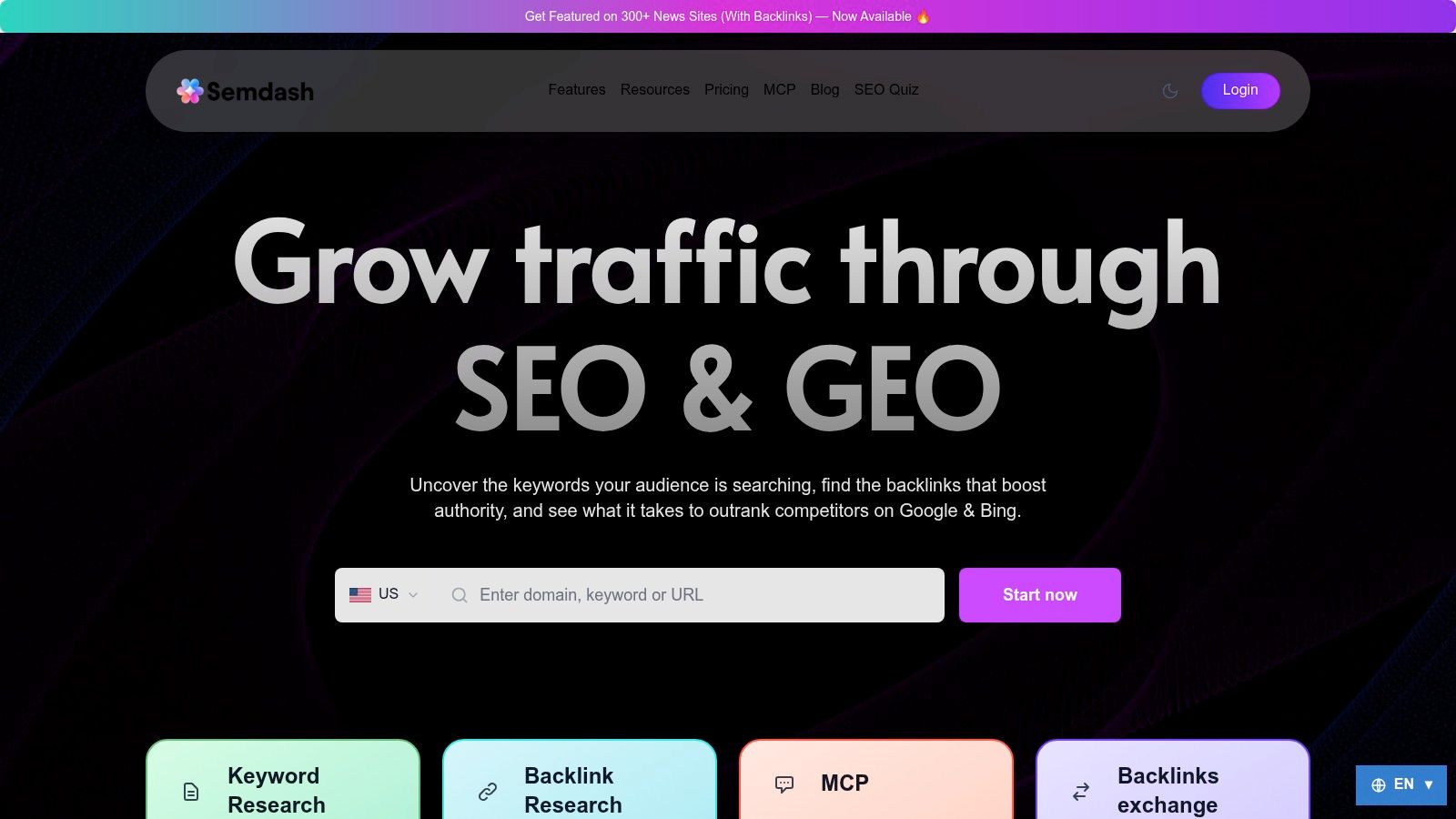
Website: SemDash
2. Ahrefs
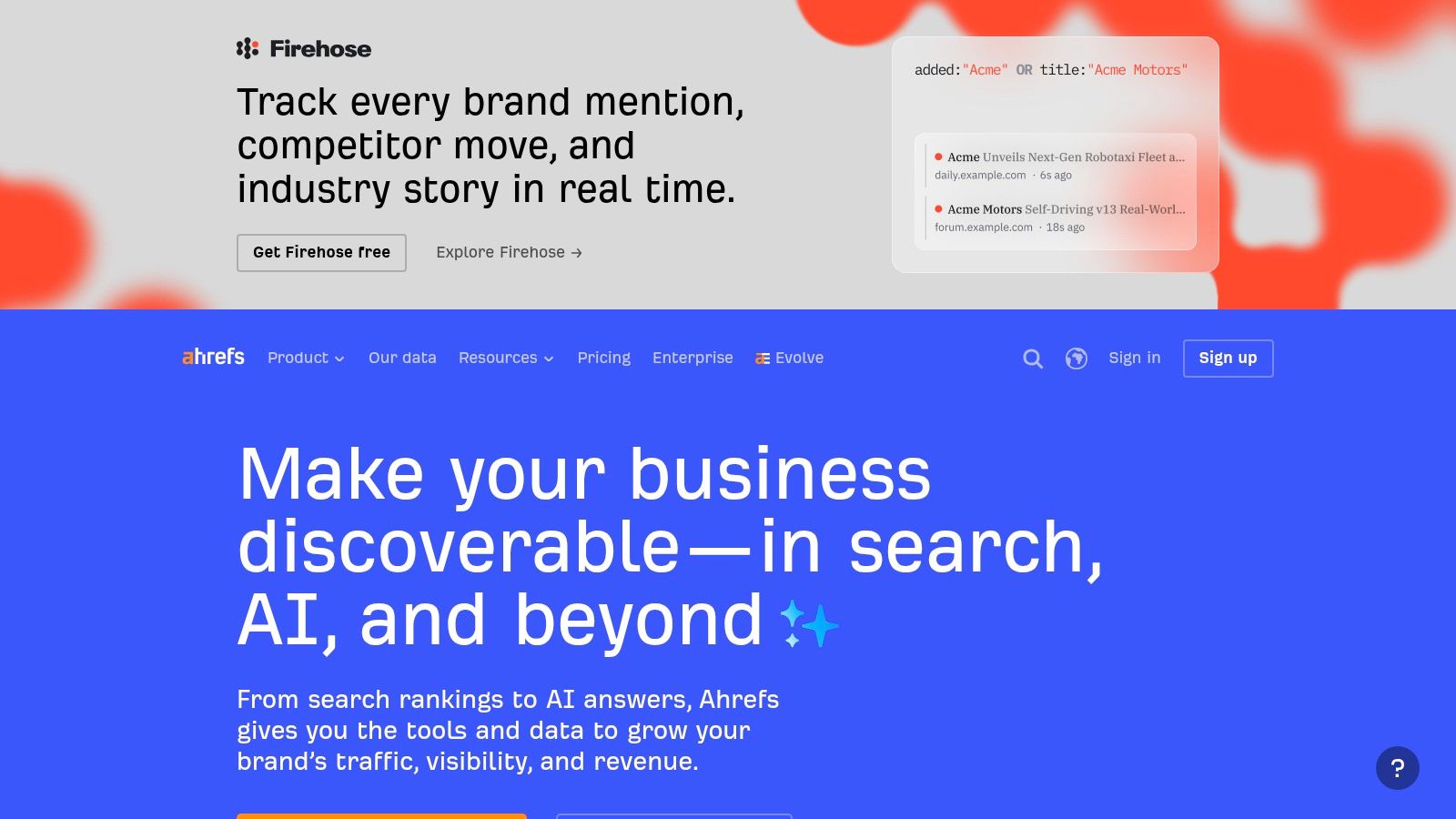
Ahrefs remains one of the safest choices when link-index depth, freshness, and competitor prospecting dominate the brief. Its backlink checker currently lists 493 billion pages in the index, and Ahrefs says the index is updated every 15 minutes on its backlink checker page. Those figures make the platform particularly useful when you're trying to find newly acquired links, recently lost links, or competitor placements before they become obvious elsewhere.
Site Explorer gives you referring domains, anchors, new and lost links, top-linked pages, and page-level backlink details. Link Intersect is still one of the quickest ways to find sites linking to several competitors but not to you. Batch Analysis helps agencies qualify a large prospect set, while the browser toolbar makes quick page-level checks convenient during research.
The trade-off is cost and capacity. Ahrefs' credit, row, and export limits can become the primary constraint when you're comparing many domains or exporting large prospect lists. I've found that the platform works best when the analyst enters with a defined question, such as finding editorial domains linking to competitor category pages, rather than downloading everything available.
Ahrefs is excellent at reducing discovery time. It doesn't remove the need to judge relevance, placement, intent, or outreach feasibility.
The interface is approachable for experienced SEOs, and the educational material is extensive. Recent AI and automation helpers can reduce repetitive work, but I'd treat them as workflow support rather than a substitute for reviewing the actual linking page. Teams comparing alternatives can also review this guide to Ahrefs alternatives before selecting a stack.
Best for: Agencies, consultants, and in-house specialists who work with backlink data every day.
Watch for: Premium pricing, row and credit limits, and the possibility that add-on automation increases total cost.
Website: Ahrefs
3. Semrush
Semrush makes sense when backlink analysis is one part of a broader marketing and reporting system. Backlink Analytics covers domain, page, referring-domain, and anchor research, while Backlink Audit adds toxicity scoring and monitoring. Backlink Gap is useful for finding competitor referring domains that your site hasn't earned, and historical trend views help separate a temporary fluctuation from a sustained loss pattern.
I'd choose Semrush for an agency that needs to place link findings beside keyword rankings, content work, client reporting, and AI visibility metrics. That integration reduces the number of exports required for monthly reporting. It also helps answer practical questions, such as whether a competitor's heavily linked page is attracting search visibility or accumulating links without a clear organic role.
The platform can feel heavy if your only job is checking referring domains. The breadth is valuable when several teams use the same subscription, but it adds navigation and configuration overhead for a specialist who wants a fast link audit. Advanced reporting and larger analysis limits may also require higher-tier access, so I'd test the exact domains and export volumes before signing an agency-wide contract.
Anchor interpretation still requires judgment. Semrush can surface patterns, but it can't decide whether an exact-match anchor is editorially natural in context or part of a manipulative campaign. For a more focused competitor workflow, I'd pair the reports with this competitor backlink analysis guide, then inspect the page surrounding each promising link.
Best for: Agencies and in-house marketing teams that want backlink, keyword, content, and visibility reporting together.
Watch for: Complexity and higher-tier limits if backlink exports are large or frequent.
Website: Semrush
4. Majestic
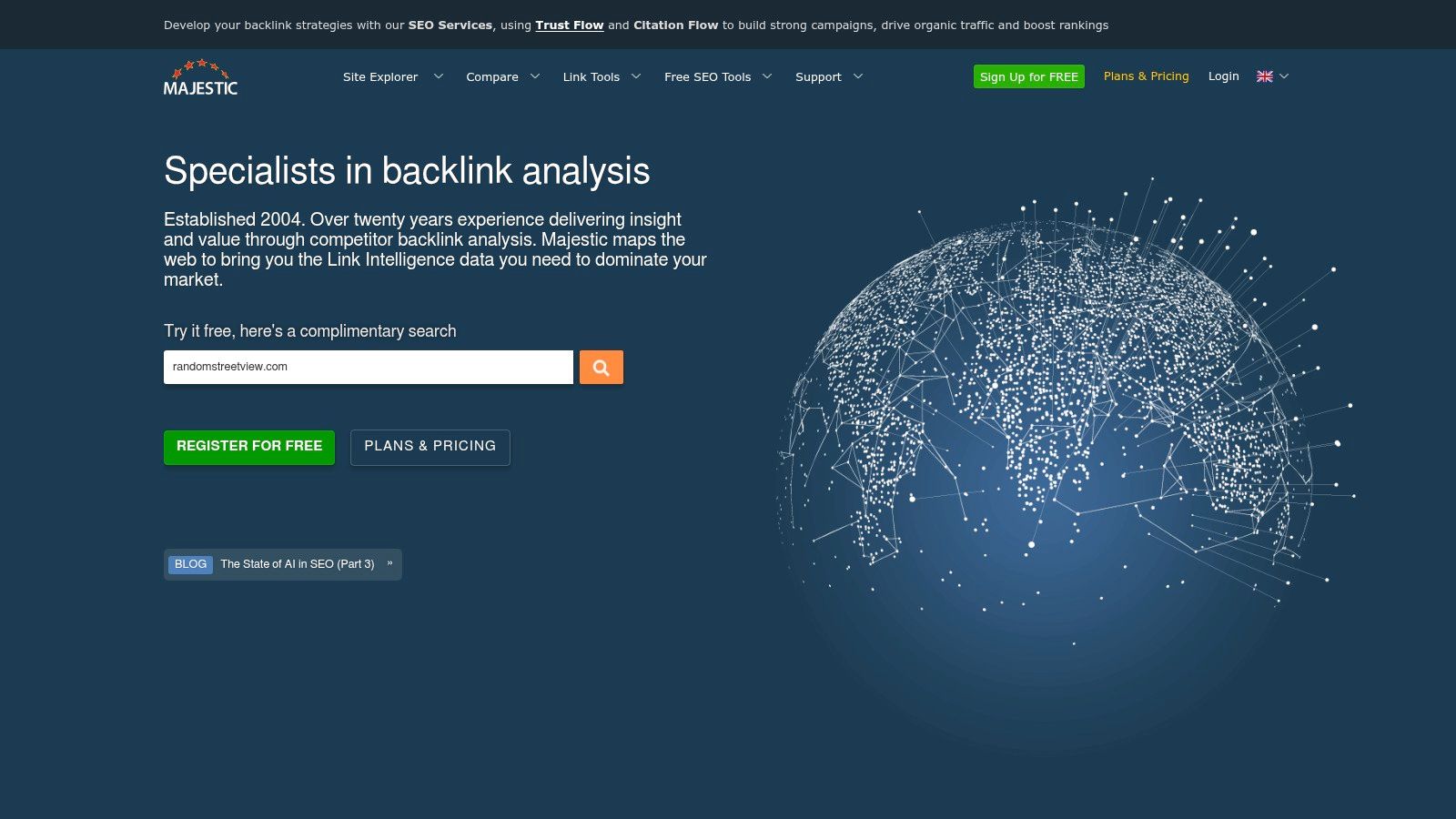
Majestic is the specialist's choice when historical link intelligence and topical interpretation matter more than an all-in-one SEO suite. Its Historic Index contains records going back to 2006, with the published comparison page reporting 4,502,566,935,407 unique URLs crawled and 21,743,308,221,308 unique URLs found across the date range shown there. The same source describes a Fresh Index covering the most recent 120 days, which makes the Fresh versus Historic distinction operationally useful rather than merely a branding difference. See the Majestic Historic and Fresh Index comparison for the underlying figures.
Trust Flow, Citation Flow, and Topical Trust Flow provide a different lens from the authority scores used by generalist tools. I find Topical Trust Flow especially useful when a domain has plenty of links but the surrounding subject matter doesn't match the site being promoted. Link Context adds another layer by showing the placement and neighboring content around a backlink.
Majestic works well for historical acquisition analysis, link velocity review, and identifying whether a competitor's authority comes from relevant subject areas or disconnected sources. It's less convenient for teams that also need keyword clustering, content briefs, rank tracking, or client-ready marketing dashboards.
The interface feels analyst-oriented. That's not a flaw for experienced practitioners, but new users may need time to understand how the proprietary metrics should inform a decision. I wouldn't use Trust Flow or Citation Flow as automatic acceptance rules. I'd combine them with topical relevance, page quality, link placement, traffic potential, and the referring domain's overall pattern.
Best for: Link researchers, auditors, and analysts who want deep historical and topical link data.
Watch for: A narrower product scope and a steeper learning curve than mainstream suites.
Website: Majestic
5. Moz Pro Link Explorer
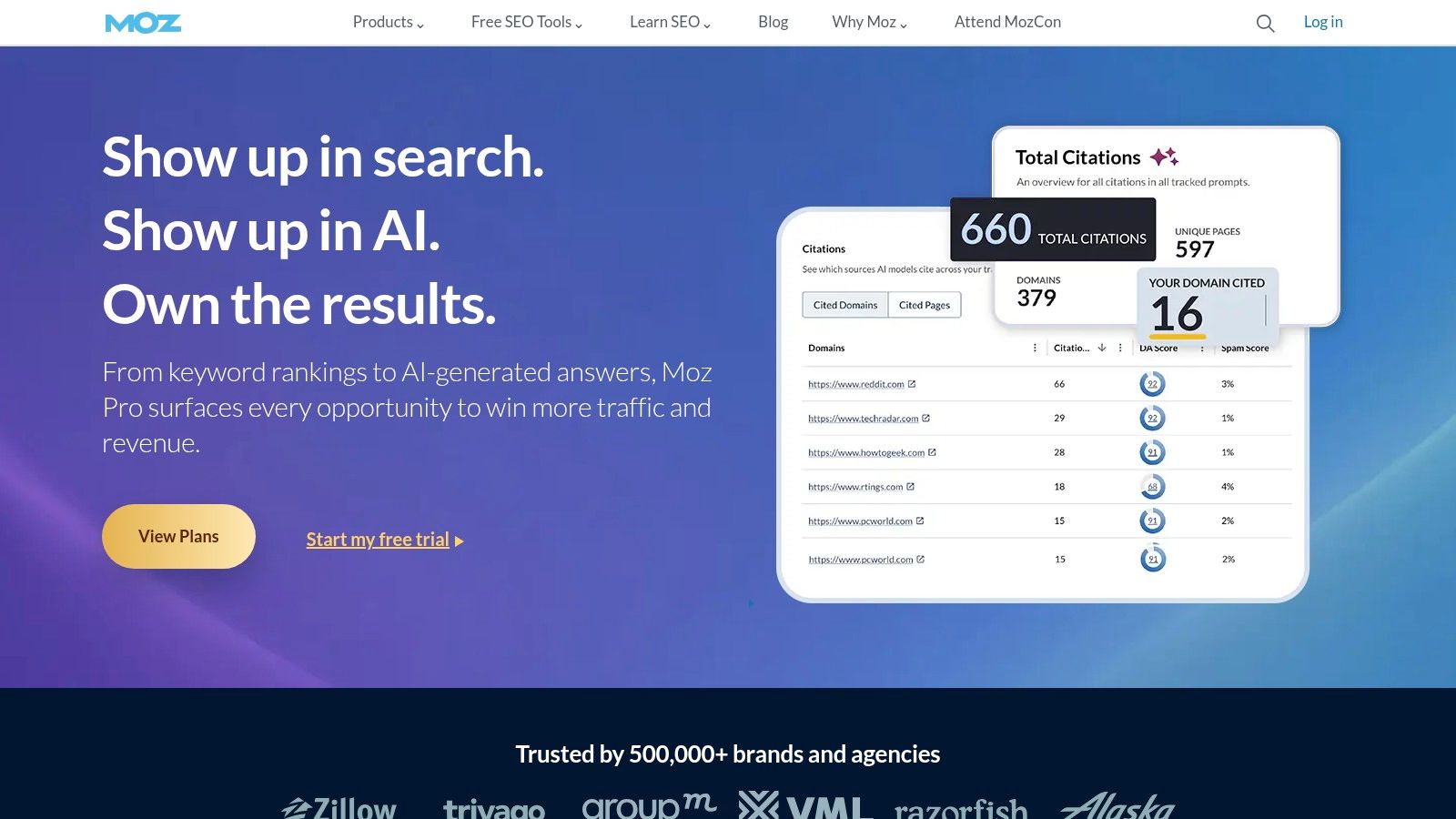
Moz Pro's Link Explorer is a practical option for teams already familiar with Domain Authority, Page Authority, and Spam Score. It provides backlink profiles, anchor reporting, top pages, link-tracking lists, and MozBar checks for quick evaluation while browsing potential prospects.
The workflow is straightforward. I'd use Link Explorer to review a site's referring domains, identify pages attracting links, check anchor distribution, and create a tracking list for outreach targets or newly earned placements. Moz's familiar metrics can also make client conversations easier when a team already uses them across its reporting.
The main limitation is coverage. Moz's link index is generally smaller than the link-first providers in this comparison, so I wouldn't assume a clean report means a complete report. For a routine audit or a small prospecting campaign, that may be acceptable. For forensic recovery work, competitor research in a crowded market, or a site with a complicated historical profile, I'd cross-check the results with Google Search Console and another crawler.
Spam Score is a screening signal, not a disavow command. A domain can have a concerning metric and still contain a relevant editorial link, while a high-authority-looking domain can host an irrelevant or manipulative placement. The useful decision comes from reviewing the linking page, anchor, destination, and domain-wide pattern together.
Best for: Beginners, content teams, and marketers who want approachable backlink workflows and familiar authority metrics.
Watch for: Smaller coverage and paid-tier requirements for broader exports and higher limits.
Website: Moz Pro
6. SE Ranking
SE Ranking combines backlink research with rank tracking, site audits, competitive research, and agency reporting. Its published materials state that the backlink database contains 2.9 trillion backlinks and 411 million referring domains, figures summarized by Ranklogs' backlink analysis overview. The scale gives smaller agencies a credible way to investigate competitor links without buying a heavily enterprise-oriented platform.
Backlink Checker covers referring domains, link types, anchor patterns, and toxic-link flags. Referring-domain and IP analysis helps identify whether a profile is genuinely diverse or concentrated across related hosting environments. The Backlinks API is valuable for agencies building internal dashboards or automating recurring reports, provided the selected plan includes the required access.
I'd use SE Ranking when the agency needs one operational system for rankings, audits, backlink monitoring, and client deliverables. The price-to-feature balance is appealing, but the absolute coverage may trail Ahrefs or Majestic for some comparisons. Plan structures and credits can also change the economics, so I'd model a real reporting month rather than judging from the feature list.
The platform is particularly useful for recurring monitoring. New and lost links, toxicity signals, and competitor changes can feed a monthly review, but I wouldn't let a toxicity label drive automatic removals. For cleanup, export the evidence, inspect the domain-level pattern, and document why a link needs action.
Best for: Small agencies and in-house teams that want a broad toolkit, reporting, and API access without an enterprise-first workflow.
Watch for: Coverage differences, plan credits, and the exact API and export limits attached to your subscription.
Website: SE Ranking
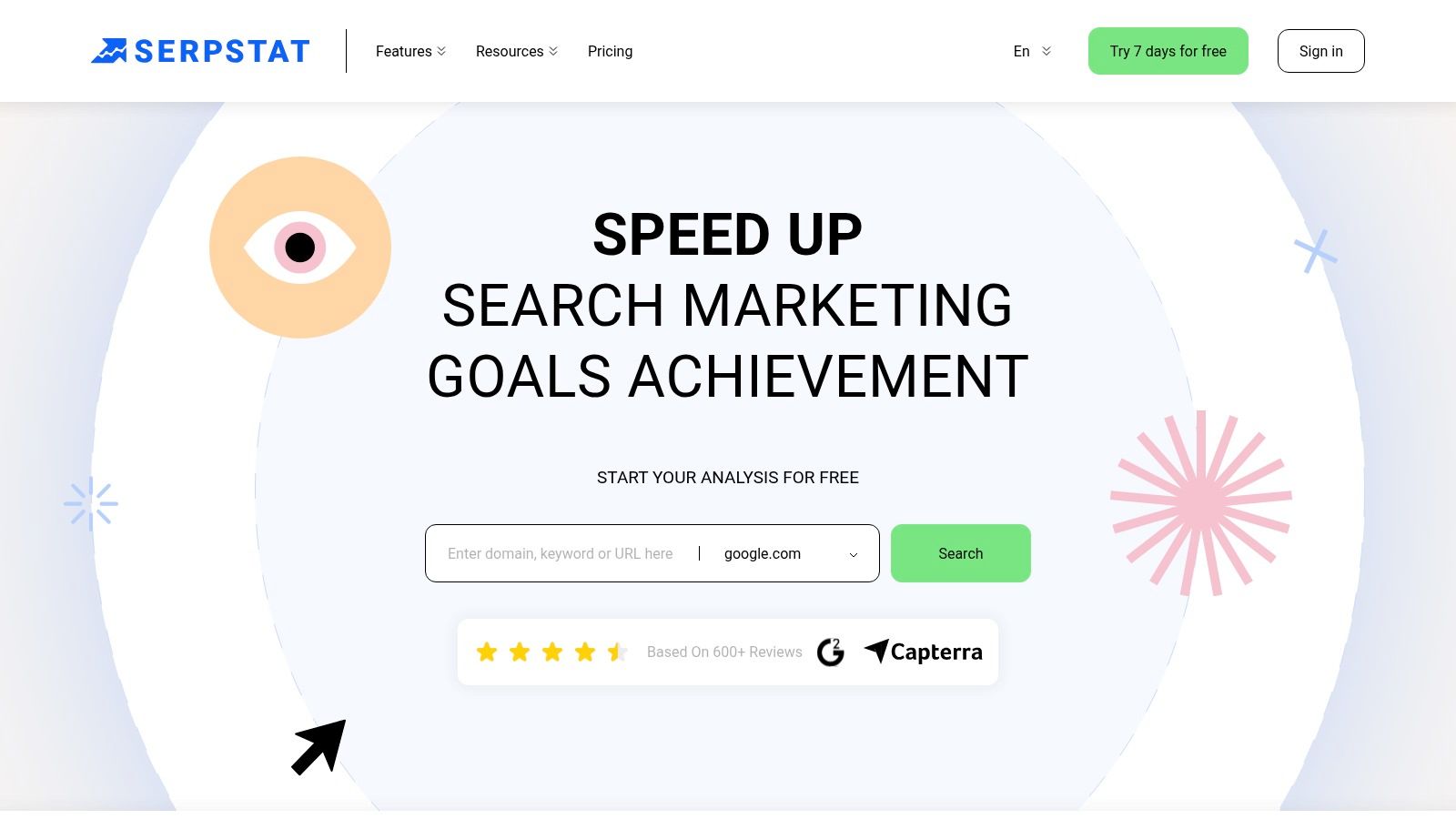
7. Serpstat
Serpstat suits teams that want backlink analysis inside a broad SEO platform with gap research, batch processing, scheduled reports, and API access. Its backlink reports cover links, referring domains, anchors, and related filters, while batch analysis supports multi-domain comparisons for recurring competitor work.
The tool's strongest practical use is combining link gaps with keyword gaps. I'd start with competitors that rank for the same commercial or informational topics, compare their referring domains, then use the keyword reports to determine whether a missing link opportunity supports a page that already has search demand. That prevents the common mistake of pursuing every competitor link without checking whether the underlying topic fits your site.
Daily credits matter here. A workflow that looks efficient on paper can become expensive in usage if analysts repeatedly rerun large batches or export broad reports. API access is available from specific tiers upward, so agencies should confirm the plan before designing automated reporting around it.
Serpstat's link index and freshness may lag the largest specialist crawlers in some niches. That doesn't make it unusable. It means I'd use it for prioritization and routine competitive work, then validate high-stakes recovery or penalty cases through another source and Google Search Console.
Best for: Budget-conscious teams that need keyword, backlink, batch, and reporting workflows together.
Watch for: Daily credit consumption, onboarding needs, and coverage differences in link-heavy industries.
Website: Serpstat
8. Mangools LinkMiner
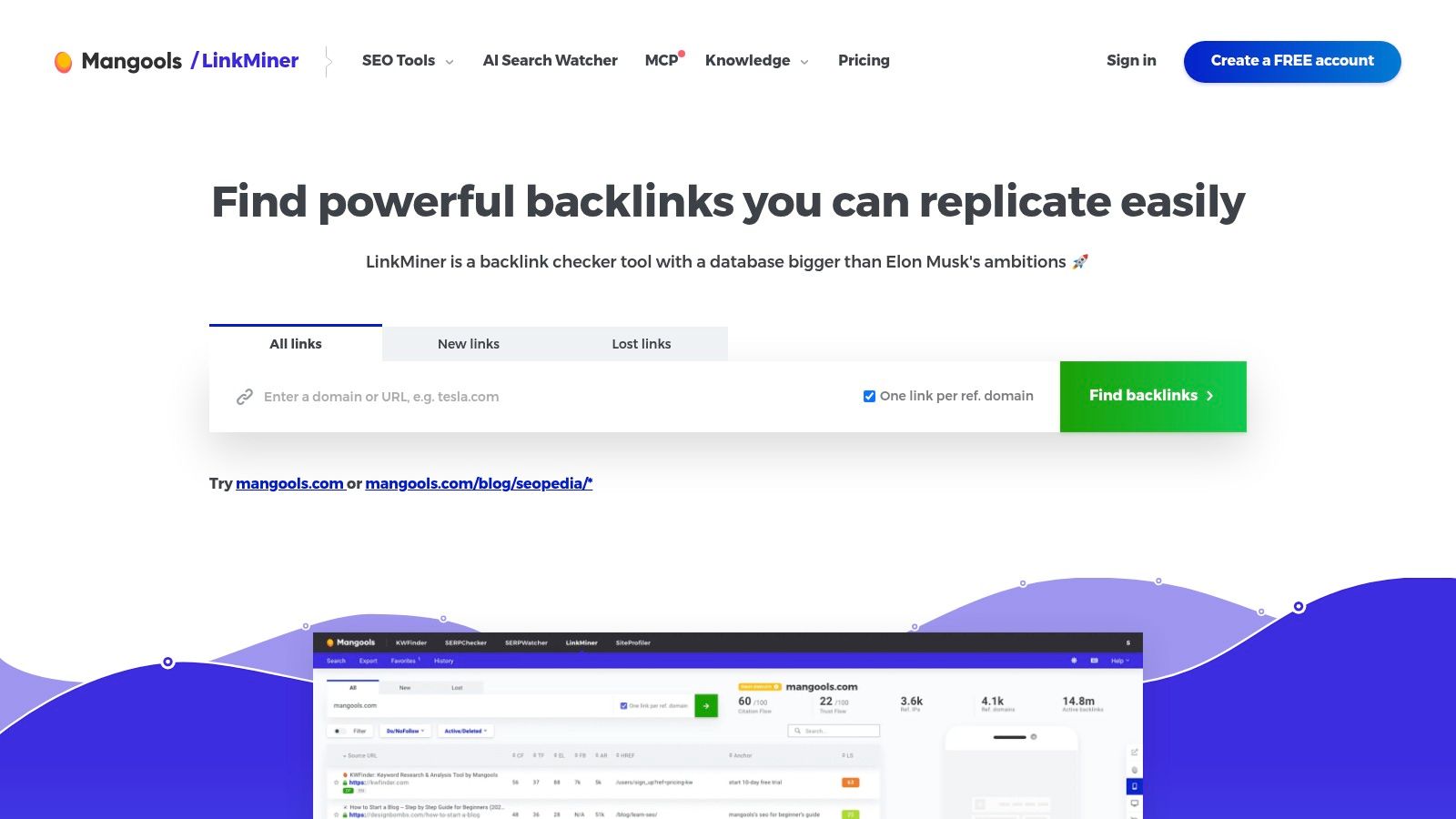
LinkMiner is built for speed. It doesn't try to replace a forensic backlink platform, and that focus makes it useful when I'm vetting prospects quickly rather than reconstructing an entire link history.
The interface surfaces Link Strength, a live preview of the linking page, new and lost links, follow and nofollow filters, and a one-per-domain option. The preview is valuable because it moves the analyst closer to the actual decision. You can see whether the page is a legitimate resource, a directory, a listicle, or a low-value page before spending time finding a contact.
I'd use the one-per-domain filter early in prospecting to avoid filling an outreach sheet with repeated pages from the same site. After that, I'd review the strongest candidate page, its topical fit, likely audience, and the content asset I'd pitch. LinkMiner's lists help preserve that shortlisting work inside the Mangools workflow.
The trade-off is index depth. LinkMiner's smaller database and row-based limits make it less suitable for historical audits, large-scale competitor research, or complicated cleanup. Its API endpoints can support backlink retrieval, but agencies should verify plan limits before building a process around automated exports.
Best for: Solo SEOs, small teams, and outreach specialists who need fast prospect qualification.
Watch for: Smaller coverage and limited forensic depth compared with Ahrefs, Majestic, or specialist audit platforms.
Website: Mangools LinkMiner
9. SISTRIX Link Module
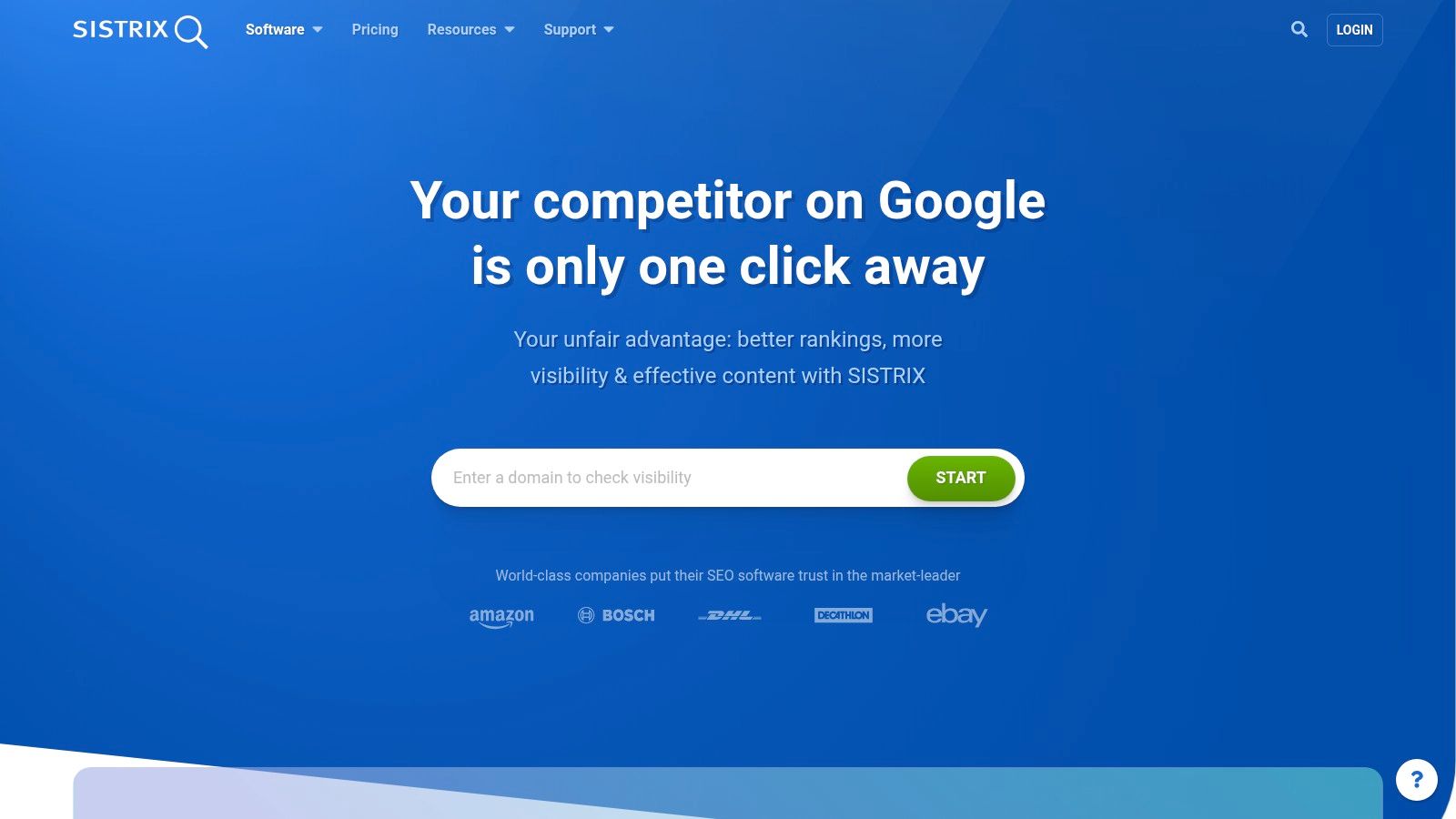
SISTRIX's Link module is most useful when you want to compare backlink patterns with organic search performance through the Visibility Index. The product combines its own data with partner sources, including Majestic, which broadens the link perspective while keeping competitor visibility in the same environment.
The module can show link types, host and domain relationships, IP-pop patterns, and competitive link sources. That IP view is helpful when a profile looks diverse at the domain level but many sites may be connected through the same infrastructure. It doesn't prove manipulation, but it gives me a reason to investigate the relationship instead of counting every domain equally.
SISTRIX works particularly well for strategic analysis. I can identify competitor link sources, compare them with visibility trends, and ask whether a link pattern supports pages that perform. That's more valuable than treating every referring domain as an independent authority vote.
The modular pricing model requires discipline. If you need link analysis, keyword visibility, content, and additional modules, the combined cost can climb. Its link-index perspective also differs from crawl-first tools, so I'd validate coverage on the specific countries, languages, and industries that matter to the campaign.
Best for: Teams that already use SISTRIX's Visibility Index and want backlink context beside search performance.
Watch for: Module costs and differences between blended data and other crawlers.
Website: SISTRIX
10. LinkResearchTools
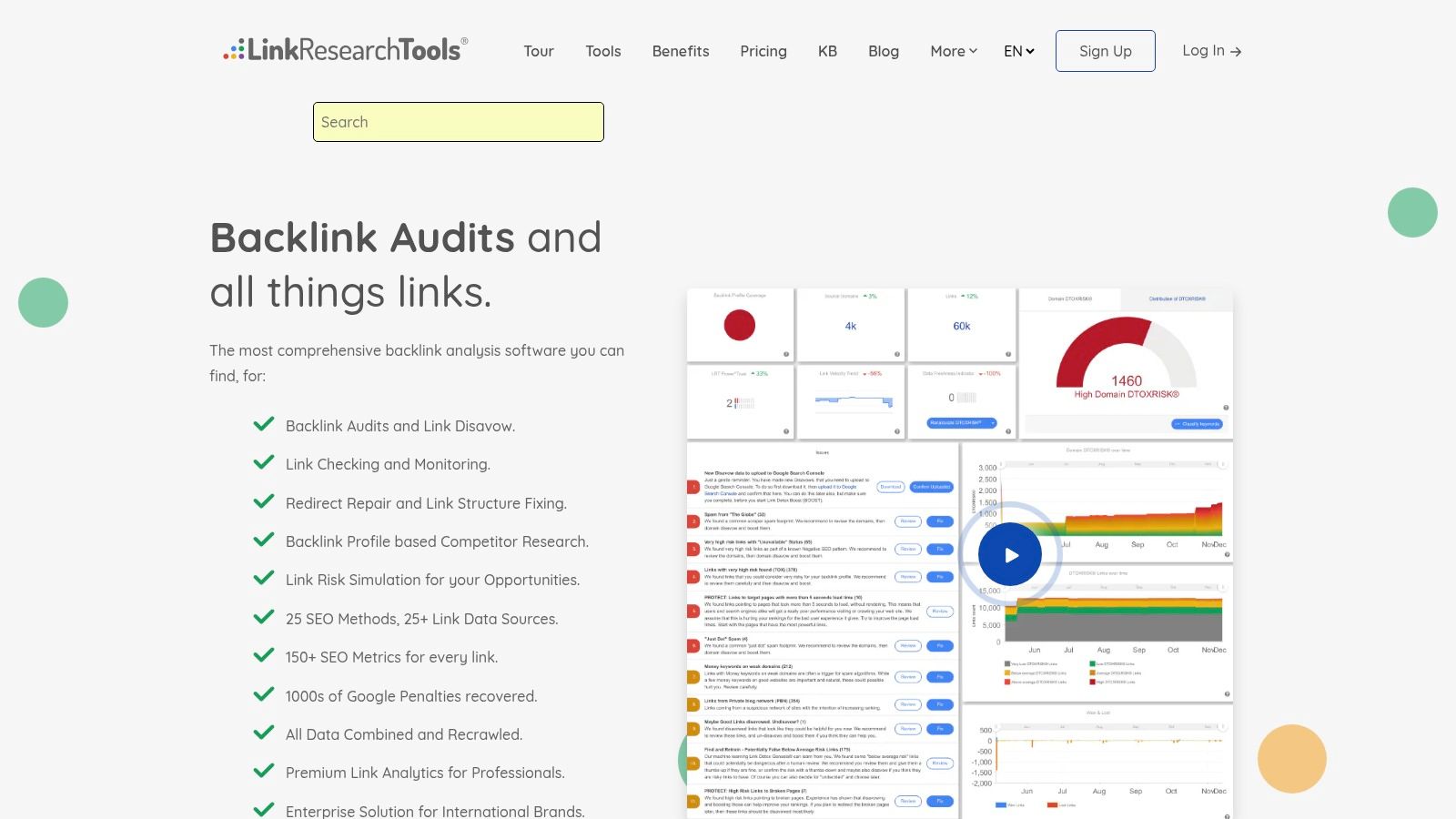
LinkResearchTools is built for difficult link work, especially deep audits, penalty remediation, risk analysis, and recovery. Its Link Detox and Smart risk scoring workflows help identify potentially harmful patterns, while Link Recover, Link Simulator, and disavow tools support the work after discovery.
This is the platform I'd consider when a site has inherited years of questionable acquisition, a failed previous campaign, or a serious need to document cleanup decisions. The value isn't just seeing more rows. It's having a methodology for grouping evidence, testing risk, simulating changes, and managing remediation across a large link set.
Power*Trust provides an alternative to the more familiar DA and DR style metrics. I wouldn't use any proprietary score as the final decision. The useful output comes from combining the score with anchor intent, topical mismatch, domain-wide patterns, link placement, and whether the site has a legitimate reason to reference your page.
LRT is expensive and advanced. Generalist suites will be faster for everyday competitor gap work, while LRT earns its place when the cost of a bad cleanup decision is high. The learning curve is real, so agencies should assign an experienced analyst rather than hand the platform to a junior user with no documented review process.
For domain-level cleanup, this toxic backlink and disavow workflow reflects the approach I prefer. I usually evaluate the referring domain's overall pattern instead of reacting to one strange URL.
Best for: Advanced agencies, penalty recovery specialists, and enterprise audit teams.
Watch for: High cost, proprietary methodology, and the need for experienced interpretation.
Website: LinkResearchTools
Top 10 Backlink Analysis Tools Comparison
| Tool | Core focus | Quality ★ | Unique strengths ✨ | Target audience 👥 | Price/value 💰 |
|---|---|---|---|---|---|
| SemDash 🏆 | All-in-one SEO: 6.6B keywords, 2.7T backlinks, 600M SERPs; URL-level mapping | ★★★★☆ | AI Overviews, AI content briefs, unlinked-mention recovery, PR backlink service | SEO specialists, agencies, content teams, SMBs | 💰 Budget-friendly; free entry + paid plans |
| Ahrefs | Link-first suite: Site Explorer, Link Intersect, batch analysis | ★★★★★ | Industry-leading link coverage & freshness; scalable prospecting | Agencies, enterprise SEOs, link builders | 💰 Premium pricing; credits limits |
| Semrush | Full-stack SEO & marketing: backlinks, audits, content/AEO metrics | ★★★★☆ | Backlink audits + toxicity, integrated reporting & client tools | Agencies, in-house marketing, consultants | 💰 Feature-rich; mid–high tiers |
| Majestic | Dedicated backlink intelligence: Fresh & Historic indexes | ★★★★☆ | Trust Flow / Citation Flow, Topical Trust Flow, historical depth | Link analysts, forensic SEOs | 💰 Moderate; niche link value |
| Moz Pro (Link Explorer) | Backlink discovery + DA/PA + Spam Score | ★★★☆☆ | Familiar authority metrics, MozBar quick checks | Beginners, small agencies, consultants | 💰 Mid-priced; familiar UX |
| SE Ranking | Full SEO toolkit: backlink checker, rank tracking, API access | ★★★☆☆ | Strong price-to-feature ratio, API & reporting for agencies | Small agencies, budget teams | 💰 Value-oriented; affordable plans |
| Serpstat | All-in-one SEO: backlinks, gap analysis, batch reporting | ★★★☆☆ | Competitive pricing, generous credits, batch workflows | SMBs, agencies needing bulk checks | 💰 Competitive/credit-friendly |
| Mangools LinkMiner | Backlink vetting in a lightweight suite | ★★★☆☆ | Usability-first, link-strength scoring, live previews | Solo SEOs, small teams, beginners | 💰 Budget-friendly in bundles |
| SISTRIX (Link module) | Modular SEO with blended link data (incl. Majestic) | ★★★★☆ | Visibility Index + blended backlink sources | European agencies, analytics teams | 💰 Module-based; can scale cost |
| LinkResearchTools (LRT) | Enterprise link audit, risk scoring & recovery workflows | ★★★★☆ | Link Detox, Power*Trust, disavow & recovery at scale | Enterprises, agencies handling penalties | 💰 Premium enterprise pricing |
Choose the Workflow You Will Actually Run
There isn't one universal winner in backlink analysis software. The right choice depends on whether your bottleneck is discovery, interpretation, recovery, reporting, outreach, or the connection between links and the pages you need to improve.
Choose SemDash when the workflow depends on connecting backlink gaps, anchor context, unlinked mentions, broken-link recovery, competitor URLs, keyword opportunities, SERP history, content planning, and AI Overviews visibility in one workspace. It's especially practical for small teams, consultants, agencies, ecommerce, SaaS, and content marketers that want broad research capability without accepting the complexity of a larger enterprise suite.
Choose Ahrefs or Majestic when link-index depth and historical link intelligence override every other requirement. Ahrefs is particularly strong for fresh competitor discovery, Link Intersect, batch prospecting, and scalable research. Majestic is the better specialist environment when Historic and Fresh Index analysis, Trust Flow, Citation Flow, Topical Trust Flow, and Link Context are central to the audit.
Choose Semrush when backlink work must live beside client reporting, keyword research, content operations, and broader marketing or AI visibility data. Choose LinkResearchTools when the assignment involves intensive risk analysis, penalty remediation, disavow preparation, or link recovery at a level where a generalist platform feels insufficient.
The simpler tools have legitimate roles too. Moz Pro works well for approachable audits and familiar authority metrics. SE Ranking offers a broad agency workflow with backlink data, rank tracking, reporting, and API access. Serpstat suits teams that want batch and gap research with controlled credits. Mangools LinkMiner is useful for fast prospect vetting, especially when usability matters more than historical coverage. SISTRIX makes sense when Visibility Index analysis already anchors the team's search workflow.
Before committing, run the same competitors and target pages through your shortlisted platforms. Compare unique referring domains, page-level opportunities, anchor patterns, lost links, broken-link candidates, and actionable gaps, not just total backlinks. Then confirm export rows, credits, API access, monitoring frequency, and multi-domain limits against the way your team works.
I also recommend merging a Google Search Console export with at least one third-party crawl, then deduplicating by root domain before scoring relevance, anchors, and traffic signals. That workflow is described in this practical backlink audit guide, and it prevents you from treating any commercial index as a complete record of reality. For reclaiming lost links, separate unlinked mentions from broken backlinks, because the first needs a new-link request while the second needs a replacement URL and a recovery pitch. This distinction is covered in the guide to reclaiming lost and broken links.
Backlink analysis only creates value when someone acts on the findings. Use the tool that makes your next decision clearer, your prospect list more relevant, and your recovery work easier to document. For broader context on how links support organic visibility, see this guide to how backlinks work.
If you want backlink gaps, anchor context, competitor URLs, keyword opportunities, SERP history, content briefs, and AI Overviews research in one workflow, explore SemDash. Start with the same competitors and target pages you use in your current process, compare the actionable referring-domain gaps, and see whether SemDash gives your team a faster path from backlink discovery to outreach and content work.