
Semrush is still one of the first names people reach for, but that default choice gets lazy fast. I've watched teams keep paying for a broad suite when they really only needed backlink depth, agency reporting, or AI visibility, and the result was always the same, too much software, not enough workflow fit. That's why I stopped asking, “What's the cheapest Semrush clone?” and started asking, “Which tool replaces the part of Semrush I use every week?”
The market has also changed in a way most old-school comparisons miss. By 2026, the conversation around the best Semrush alternatives is fragmented by use case, not dominated by one obvious winner, with independent guides splitting recommendations between Ahrefs for backlink and content research, SE Ranking for all-around SEO and reporting, Moz Pro for value, and Nightwatch for rank tracking and LLM visibility, while G2 review spreads show demand distributed across several rivals rather than one substitute, including SE Ranking, Similarweb, Ahrefs, and Serpstat (Nightwatch's 2026 comparison analysis). That's the core starting point.
I'm not interested in theoretical feature charts. I want a tool I can drop into a live client workflow, trust on Monday morning, and defend in a budget review on Friday. So I'm going to rank these like a practitioner would, by what they're good at, what they're bad at, and where they break when a real SEO team starts pushing them.
Table of Contents
- 1. SemDash
- 2. Ahrefs
- 3. Moz Pro
- 4. SE Ranking
- 5. Serpstat
- 6. SpyFu
- 7. Similarweb
- 8. SISTRIX
- 9. Majestic
- 10. Mangools
- Top 10 SEMrush Alternatives, Feature Comparison
- My Checklist for Choosing Your Winner
1. SemDash
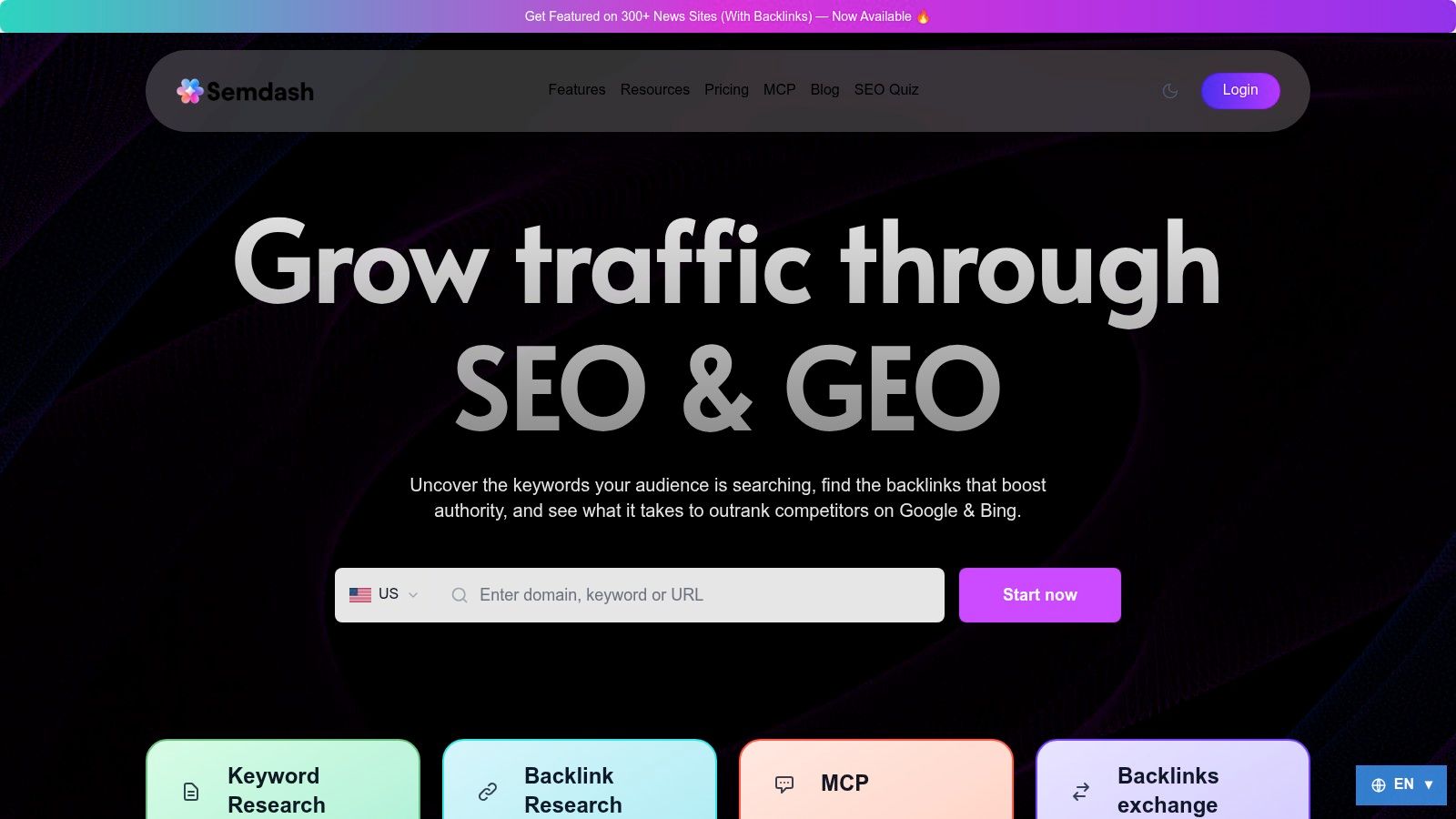
SemDash is the one I'd put at the top if the job is competitive discovery without the baggage of an enterprise suite. What grabbed me first was the way it turns research into a concrete action plan, not just a pile of exportable data. I can look at domain keywords, keyword gaps, top pages, traffic share, and backlink gaps in one place, then map the opportunity down to the exact URL that needs attention.
Why I'd use it first
The product's scale is unusually relevant for teams that care about freshness. SemDash says it works from 6.6 billion Google keywords updated within 30 days, a 2.7 trillion backlink index with 15 billion plus crawled in the last 24 hours, and 600 million SERPs refreshed monthly (SemDash product site). That matters because stale datasets are where a lot of “cheap” tools fail, especially when you're chasing long-tail topics or trying to reverse-engineer a competitor's most profitable pages.
I also like the way it handles outreach. The backlink gap, anchor context, unlinked brand mentions, and broken-link recovery workflows are built for action, not just research theater. If I'm building a link target list, I want to know which domains already link to competitors, which anchors they use, and which pages on the competitor site are attracting those links.
Practical rule: If you can't name the page you'll optimize and the page you'll pitch a link from, your backlink research isn't finished.
SemDash also stands out on AI search visibility. It tracks AI Overviews and shows which queries trigger domain mentions and the exact URLs cited, which is directly useful if you're trying to understand whether your content is getting surfaced in Google's AI-generated answers. The Claude/ChatGPT MCP integration is a nice layer on top because it lets you ask questions in plain English and turn live SERP signals into briefs without bouncing between tools.
Where it wins and where it can feel light
I'd use SemDash when the workflow is content planning, competitor page mapping, and link opportunities in one sequence. The interface is intentionally simplified, and that's a strength when you're onboarding a freelancer or a small in-house team fast. The education layer also helps, since the platform offers a YouTube channel, SEO Academy, a public roadmap, and free live calls, plus interfaces in English, German, Polish, and Spanish (SemDash product site).
The tradeoff is that pricing tiers and limits aren't spelled out as clearly as on some bigger tools, so you may need a trial or demo to validate fit. That's not a dealbreaker, but I wouldn't buy blind if your team needs hard procurement numbers before approval.
If you want a practical starting point for competitor gap work, I'd use SemDash like this. Pull a competitor domain, inspect the top pages driving their traffic, isolate the pages with the strongest keyword overlap, then build one content brief per page cluster so you don't create cannibalization. That workflow is exactly where SemDash feels sharper than a generic all-in-one suite.
Website: SemDash
2. Ahrefs
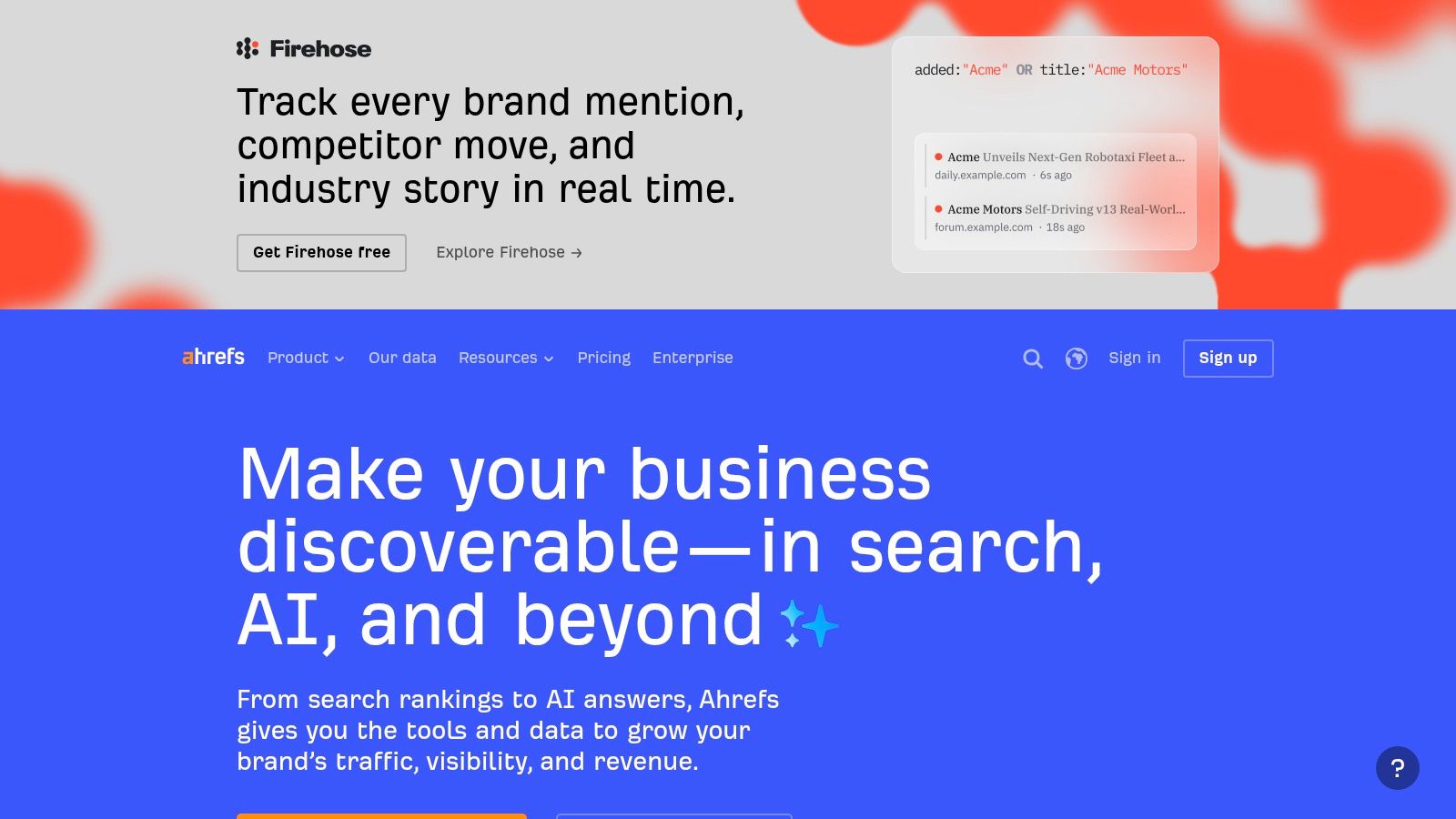
Ahrefs is the cleanest swap when your team lives and dies by off-page SEO. I've used it in link-heavy audits where Semrush felt broader than necessary, and Ahrefs gave me the one thing I needed, stronger backlink intelligence. One independent review cites a 16T plus backlink index, and positions Ahrefs as strongest for backlink analysis and content research (One Little Web's Semrush alternatives review).
That scale matters less as a vanity metric and more as a workflow advantage. When you're doing link gap analysis, referring-domain discovery, or checking anchor context across competing pages, Ahrefs is the tool that feels built for the specialist who already knows what they want.
The downside is that it can slow teams down if they need to move quickly across lots of client accounts. The same review notes that the interface takes time to learn, and I agree with that. Ahrefs is powerful, but it isn't the friendliest option for a junior analyst who needs to get productive on day one.
The pricing tells you where it sits in the market. G2 lists Ahrefs at $129/month (G2 review page referenced in the verified data), which puts it in the same general budget zone as mid-market SEO suites, but with a much tighter off-page focus. If your team only uses Semrush for backlinks, competitor pages, and keyword discovery, Ahrefs is one of the few alternatives that doesn't feel like a step down.
I'd still be careful if your work depends on broader ecosystem signals. Ahrefs is superb for link and content workflows, but I wouldn't choose it as my first pick for teams that need the widest agency reporting stack or the most beginner-friendly experience. It's the better instrument when precision matters more than breadth.
Internal comparison note: if you're deciding between these two specifically, I'd also look at SemDash's Ahrefs alternative breakdown before making the switch.
Website: Ahrefs
3. Moz Pro
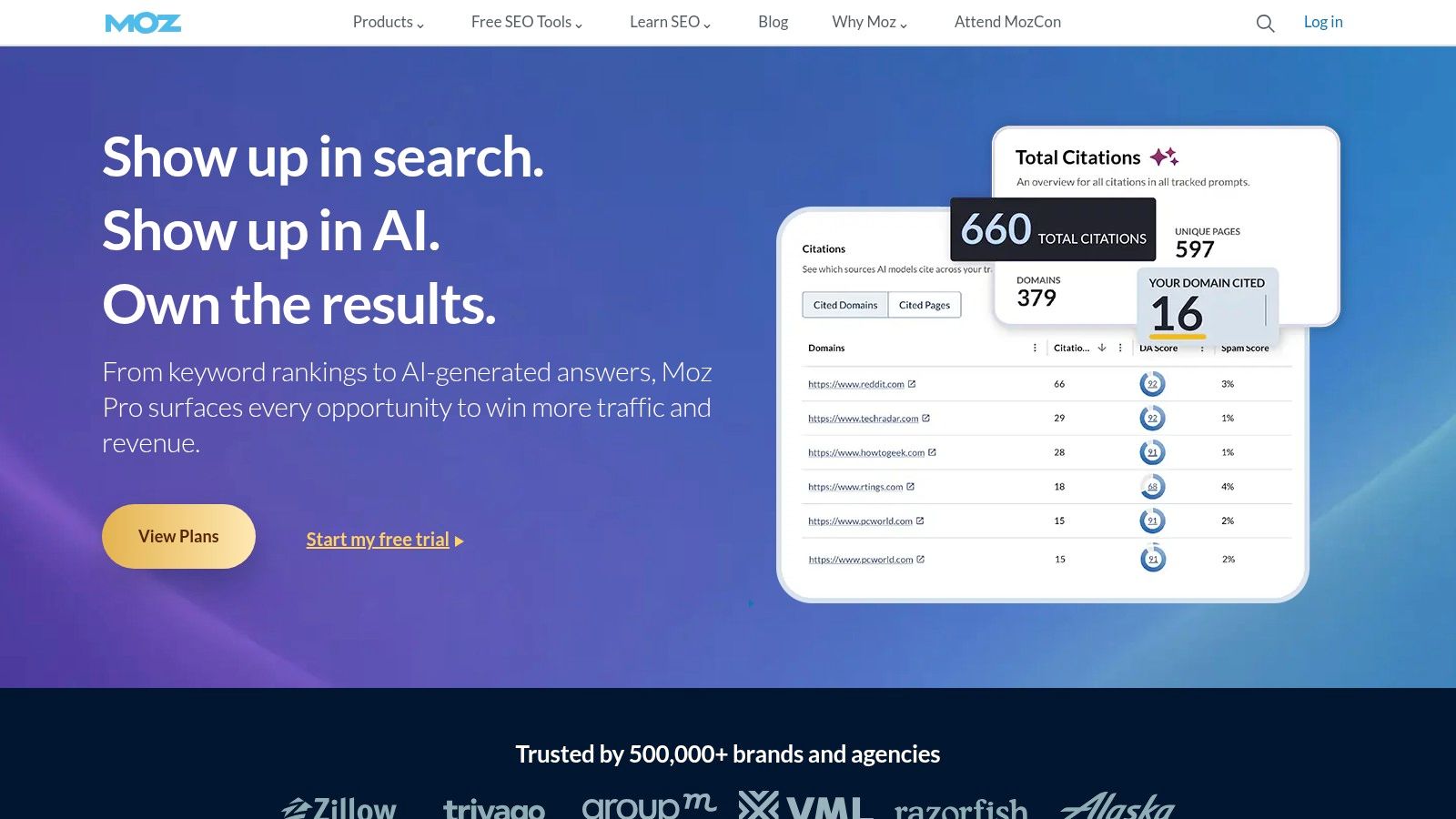
Moz Pro is the tool I recommend when a team wants recognizable SEO metrics without the operational overhead of a more complex suite. It's still one of the easiest platforms to explain to clients because Domain Authority and Spam Score are familiar anchors in reporting, and that reduces friction when you're presenting progress to non-SEOs.
What I like most about Moz Pro is that it keeps the core workflow simple. Keyword Explorer, Rank Tracking, Site Crawl, Link Explorer, and campaign monitoring cover the basics cleanly, without forcing you to learn a dozen adjacent modules. That makes it useful for smaller teams, newer marketers, and consultants who need a straightforward system they can keep current.
The pricing also signals its place in the market. In a 2026 round-up, Moz Pro's starting price was listed at $49/month (the verified 2026 comparison set). That's a very different posture from Semrush's own $139.95/month Pro, $249.95/month Guru, and $499.95/month Business pricing, which means Moz Pro can be a legitimate cost-control move if your needs are narrower (Semrush pricing reference in the verified data).
I wouldn't oversell it, though. Moz Pro is best when you want a calm, understandable workflow, not when you need the deepest database or the most aggressive competitive research features. If you're running large-scale link acquisition or highly granular content reverse-engineering, you may outgrow it.
Moz Pro makes the most sense when the client wants clarity more than cleverness.
That's my practical read. It's a solid fit for teams that value ease of use, familiar authority metrics, and a controlled monthly bill, but it's not the tool I'd pick for the heaviest data-driven competitive work.
Website: Moz Pro
4. SE Ranking
SE Ranking is the one I reach for when a client says, “I want the Semrush experience, but I don't want Semrush pricing or clutter.” The reason it keeps showing up in serious comparison guides is simple, it's broad enough for agencies, but still organized enough that teams can adopt it without a long ramp.
The market evidence lines up with that. G2 shows SE Ranking at 4.7/5 stars from 1,564 reviews, and Capterra lists it at 4.7/5 from 297 reviews in the verified data set (Capterra alternatives page). That review volume matters because it suggests the tool isn't just getting good ratings from a tiny niche, it's being used in real workflows across different team types.
The operational appeal is obvious. SE Ranking covers rank tracking, site audits, keyword research, backlink monitoring, and white-label reporting. That's why it's repeatedly framed as an agency-friendly alternative. The platform also has a more modern visibility story than older suites, because it connects traditional SEO signals with AI search coverage through its broader ecosystem and MCP access.
I also like how it handles client work. If your process depends on reports, project structure, and repeatable campaigns, SE Ranking tends to feel calmer than a lot of tools in this category. It's not trying to be the most intimidating database on the market. It's trying to be the one your team can keep using six months from now.
The one caution is the same caution I'd give any broad suite, don't buy it because it “covers everything.” Buy it because your weekly workflow includes reporting, tracking, audits, and competitor research. That's where it earns its keep.
Website: SE Ranking
5. Serpstat
Serpstat makes sense when budget pressure is real, but you still need a broad SEO toolkit. It's one of the better examples of a value platform that doesn't feel stripped down to the bone. In the verified comparison data, it appears with 4.6/5 stars from 464 reviews on G2, which is a useful sign that buyers are using it for more than casual experimentation (Nightwatch's comparison guide).
I'd look at Serpstat if I needed keyword research, site analysis, rank tracking, site audit, and backlink analysis without paying for a premium brand name. The reason it keeps earning attention is that it tries to stay broad while keeping the plan structure approachable. That makes it attractive for smaller agencies and growing teams that need predictable subscription math.
One of the strongest things going for it is flexibility. Serpstat's pricing split in 2026 positioned it as a lower-cost contender, and the broader review ecosystem also shows it adapting to AI-era workflows with LLM-oriented features in newer plan discussions. That matters because a lot of older SEO tools still behave like AI search doesn't exist yet.
The tradeoff is polish. Serpstat can feel denser than the most intuitive tools, and I wouldn't recommend it to someone who needs the cleanest possible interface above all else. But if I were optimizing for feature coverage per dollar, it belongs near the top of the conversation.
I'd use Serpstat when the team is price-sensitive and wants a real working suite, not a barebones rank tracker with a few extras bolted on. If that's your situation, it's worth a serious test run.
Website: Serpstat
6. SpyFu
SpyFu is the tool I'd hand to someone who mainly wants to know what competitors are bidding on, what they rank for, and which keywords keep showing up in their playbook. It's one of the few alternatives that still feels unapologetically built around competitive intelligence, especially where PPC and SEO overlap.
The pricing is part of the appeal. The verified data shows SpyFu starting at $39/month in one 2026 roundup, and the tool's own positioning has long leaned toward affordable competitor research (Outrank's comparison overview). That makes it a natural fit for smaller teams that spend more time on market stalking than on technical audits.
What works well is the workflow. SpyFu's Kombat comparisons and keyword gap views are useful when I want to understand overlap fast. The product also leans into ad history, which is a key reason many marketers use it. If I'm trying to reverse-engineer a search campaign, seeing old ad copy and competitor keyword behavior is more useful than a giant, abstract dashboard.
The limits show up when you ask SpyFu to be something it isn't. It doesn't try to be a full technical SEO platform, and its rank tracking is fairly basic compared with broader suites. That's fine if you know what you're buying. It becomes a problem only when teams expect Semrush-level breadth and forget that SpyFu is more specialized.
I'd keep it in the shortlist for marketers who care about competitor research first and everything else second. It's not the biggest toolbox here, but it's one of the most focused.
Website: SpyFu
7. Similarweb
Similarweb is not the tool I'd pick if the assignment is pure SEO replacement. I'd pick it when the core question is broader, how much traffic does the market get, where is it coming from, and how does my category compare across channels. That's why it belongs on a Semrush alternatives list, but not as a one-to-one clone.
The verified data shows it operating on a very different scale and price tier, with Semrush's May 2026 competitor snapshot listing Similarweb at 20.11 million visits and pricing starting at $199/month in one comparison set, while other 2026 roundups place it higher depending on package and coverage (Semrush competitor snapshot). That signals a platform aimed more at intelligence and benchmarking than at the everyday SEO operator.
What makes Similarweb useful is the broad channel view. It combines organic, paid, referral, and social intelligence, so I can sanity-check a market instead of only a keyword set. If I'm advising a client on category opportunity, or trying to understand whether a competitor is winning because of search, referrals, or paid distribution, Similarweb is much better suited than a pure SEO suite.
I also respect that it has a distinct AI-search visibility conversation now. The platform's newer packages and product messaging reflect the shift toward AI brand visibility and citation analysis, which makes sense for teams tracking brand presence beyond rankings alone.
The tradeoff is depth. Similarweb's self-serve plans are more constrained on historical coverage, and if your work depends on deep SEO execution, it can feel expensive for what you need. I'd use it when market research matters as much as search optimization.
For a deeper side-by-side on this specific positioning, I'd also compare it with SemDash's Semrush versus Similarweb breakdown.
Website: Similarweb
8. SISTRIX
SISTRIX is the tool I'd recommend to teams that care about visibility tracking more than flashy dashboards. Its core idea is very simple, give people a transparent KPI they can use to compare domains over time. That's exactly why the Visibility Index keeps showing up in discussions about European SEO workflows and competitor benchmarking.
The pricing and positioning reinforce that focus. In the verified 2026 comparisons, SISTRIX appears at 4.4/5 stars on G2 and 4.5/5 on Capterra, with a starting price of €119/month in the broader comparison set (SE Ranking's comparison roundup). That puts it into the serious-pro tool category, not the budget tier.
I'd use SISTRIX when I need reliable visibility history, SERP context, and domain comparison without a lot of extra noise. It's especially appealing for teams working in EU markets, because the platform has long been associated with strong European coverage and daily visibility tracking.
The limitation is obvious once you've used it a while. Backlink intelligence is not the core reason to buy SISTRIX, and I would not choose it as my first pick for link-heavy outreach work. If backlinks are central to your program, Ahrefs or Majestic is a better fit.
That said, SISTRIX has a discipline that many broader suites lack. It knows what it is, and it doesn't try to be everything. For experienced SEOs who want a clean visibility KPI and serious SERP history, that focus is a strength.
Website: SISTRIX
9. Majestic
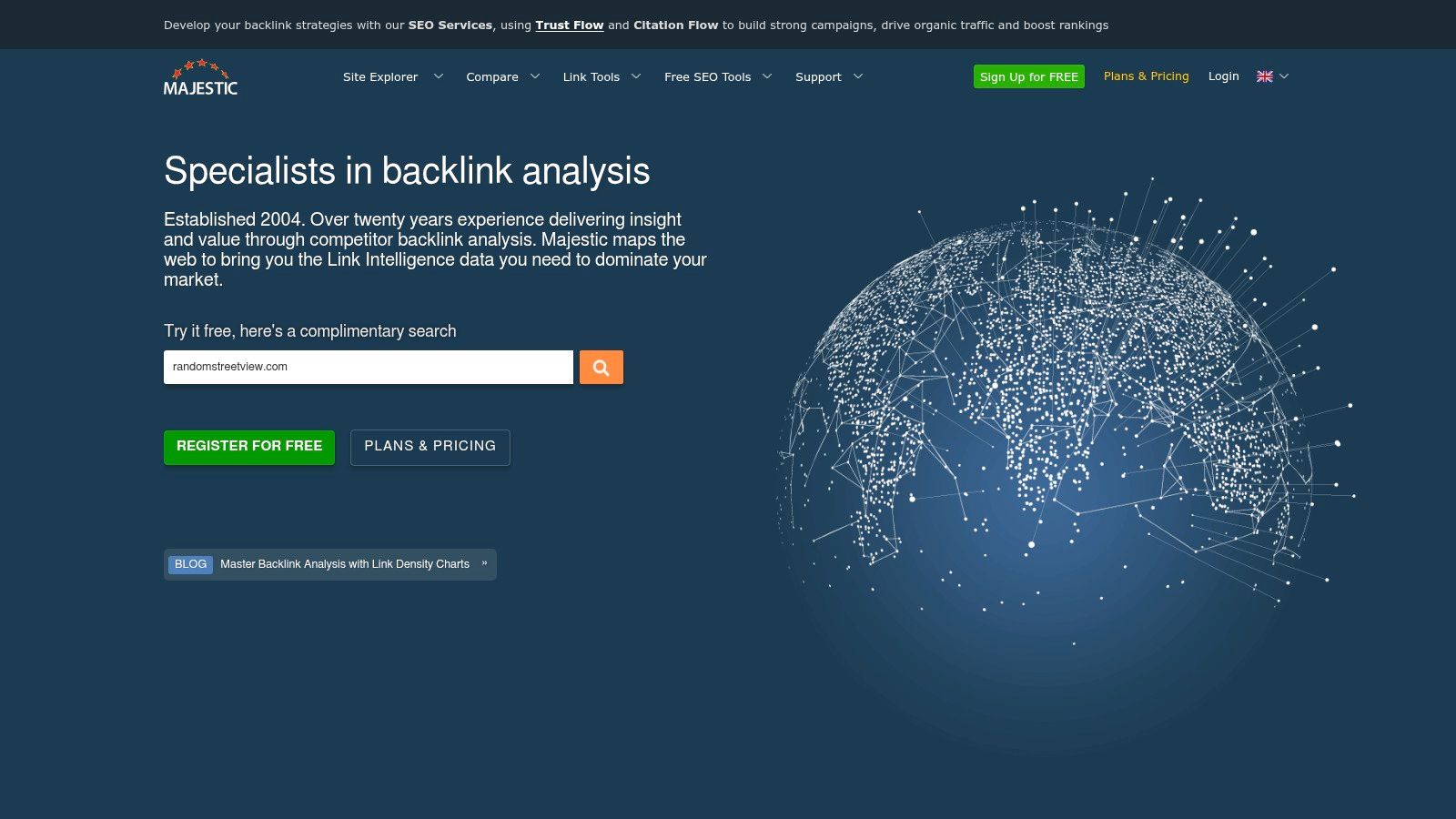
Majestic is the specialist's specialist. I don't reach for it when I need a full SEO suite. I reach for it when the link graph is the problem and everything else is secondary. If you spend your day doing link prospecting, competitive link profiling, or checking authority signals from a backlink-first angle, Majestic earns its place.
Its value comes from the proprietary metrics. Trust Flow and Topical Trust Flow are the signatures here, and they're still useful because they give link analysis a more structured vocabulary than a generic backlink count. The product also offers Fresh and Historic backlink indexes, plus bulk checkers and API access on upper tiers, which makes it practical for teams doing serious link work.
I'd compare Majestic to a wrench, not a toolbox. That's not a criticism. It's the reason some SEOs prefer it. When the job is evaluating link neighborhoods, checking context, and understanding where authority sits in a backlink profile, a narrower specialist can be faster and cleaner than a broad platform.
The downside is the same one that comes with any specialist tool. It doesn't replace Semrush by itself. It supplements a stack, and that's how I'd buy it. If your team also needs keyword research, rank tracking, and audits, Majestic should sit beside another platform, not instead of one.
The interface is utilitarian, which I'd describe as functional rather than friendly. But for backlink-first practitioners, the data focus is the point.
Website: Majestic
10. Mangools
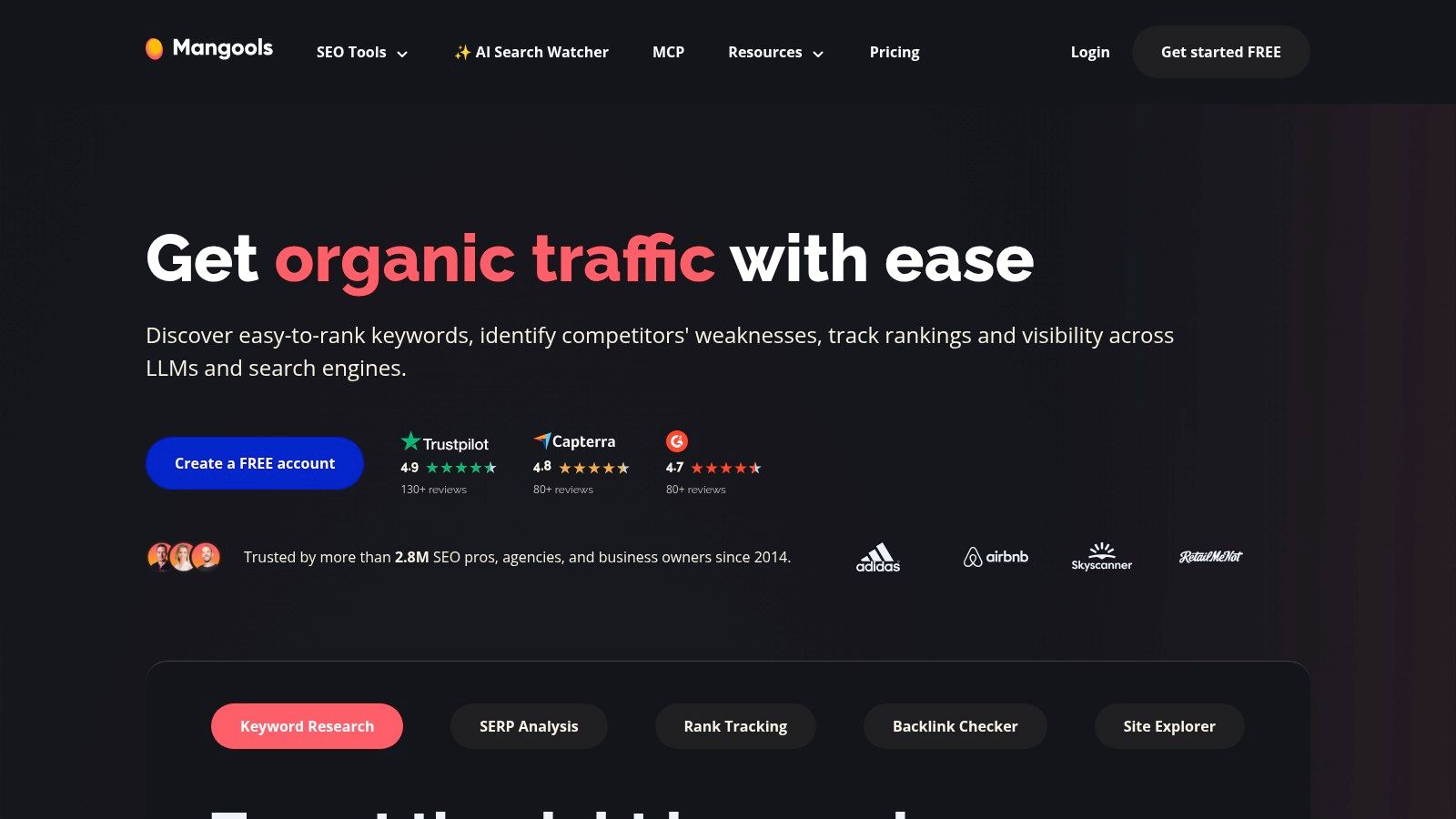
Mangools is the cleanest recommendation I can make for solo SEOs and small teams that want something approachable. It bundles KWFinder, SERPWatcher, SERPChecker, LinkMiner, and SiteProfiler into a workflow that doesn't make you fight the interface before you get to the data. That ease of use is the reason people stick with it.
The pricing is also legitimately friendly. In the verified comparison data, Mangools starts at $61/month, and other 2026 coverage places it among the more accessible options in the category (SE Ranking's 2026 comparison). It also shows up with strong user ratings in the same ecosystem, including 4.7/5 on G2 and 4.8/5 on Capterra in the background research set.
I'd use Mangools when I don't need a giant enterprise stack, just a tight workflow for keyword discovery, SERP review, rank tracking, and basic backlink checks. It's particularly good when the team needs to move quickly, because the platform doesn't bury the core actions.
The downside is obvious if you've worked in bigger SEO environments. Mangools is lighter on technical depth and enterprise-style features, so power users will hit ceilings faster than they would with Ahrefs or Semrush. That's not a flaw if you bought it for the right reason, but it becomes frustrating if you expect it to be a scaled-up replacement.
My rule with Mangools: if your SEO work fits on one screen and one meeting, it's probably a good fit.
That's the cleanest way I can summarize it. Mangools is a practical, low-friction option for smaller SEO programs that value speed and clarity over raw database size.
Website: Mangools
Top 10 SEMrush Alternatives, Feature Comparison
| Tool | Core focus & features | Distinctive capabilities ✨ | UX & Quality ★ | Best for 👥 | Price / Value 💰 |
|---|---|---|---|---|---|
| SemDash 🏆 | 6.6B keywords, 2.7T backlinks, 600M SERPs, URL-level mapping, AI briefs | AI Overviews (citation tracking), unlinked‑mention recovery, MCP ChatGPT/Claude integration ✨ | ★★★★☆ Fast, simplified UI; praised by customers | Solo SEOs, agencies, growth teams 👥 | 💰 Competitive; free trial / demo |
| Ahrefs | Site Explorer, Keywords Explorer, Rank Tracker, Site Audit | Deep backlink index & mature SERP history, scalable for enterprises ✨ | ★★★★★ Robust, enterprise-grade | Agencies, enterprises, advanced SEOs 👥 | 💰 Higher cost; strong ROI at scale |
| Moz Pro | Keyword Explorer, Rank Tracking, Site Crawl, Link Explorer | Recognizable metrics (DA/Spam Score), beginner‑friendly workflows ✨ | ★★★★☆ Intuitive for teams & clients | Small teams, agencies, consultants 👥 | 💰 Mid-range; flexible add-ons |
| SE Ranking | Rank tracking, Site Audit, backlink monitoring, reporting | White‑label reporting, agency portals, local SEO add-ons ✨ | ★★★★☆ Practical UI for reporting | SMBs and cost-conscious agencies 👥 | 💰 Cost-effective; good value |
| Serpstat | Keyword/domain analysis, Rank Tracker, Site Audit, batch reports | Credit-based modules, AI modules & exports controls ✨ | ★★★★☆ Value-oriented, learning curve on credits | Teams & agencies needing adjustable exports 👥 | 💰 Value tiers; credit model |
| SpyFu | PPC + SEO competitor data, ad history, keyword gap | Strong PPC insights, Kombat comparisons, unlimited exports on higher tiers ✨ | ★★★★☆ Transparent, export-friendly | PPC+SEO specialists, advertisers 👥 | 💰 Clear pricing; money-back guarantee |
| Similarweb | Traffic benchmarking, multi-channel intelligence, AI visibility | Holistic channel view for market sizing & cross-channel insights ✨ | ★★★★☆ Enterprise UX for market research | Market teams, product & enterprise analysts 👥 | 💰 Pricier for deep historical data |
| SISTRIX | Visibility Index, keyword & competitor analysis, on‑page tools | Daily Visibility Index with strong EU market coverage ✨ | ★★★★☆ Transparent metrics favored in EU | EU-focused SEO teams & agencies 👥 | 💰 Modular, transparent pricing |
| Majestic | Site Explorer, Trust Flow & Topical Trust Flow, link graphs | Rich link context, Fresh & Historic indexes for deep link work ✨ | ★★★☆☆ Utilitarian UI; specialist tool | Link pros, backlink analysts 👥 | 💰 Mid-range; API tiers available |
| Mangools | KWFinder, SERPWatcher, LinkMiner, SiteProfiler | Clean, simple UI for long-tail discovery and quick workflows ✨ | ★★★★☆ Very approachable; quick onboarding | Solo SEOs, small teams, beginners 👥 | 💰 Affordable; clear subscription tiers |
My Checklist for Choosing Your Winner
Switching tools is annoying enough that I never recommend doing it casually. The best way to avoid buyer's remorse is to test your top two or three contenders against the same live workflow, not a feature checklist. Start with the three things your team does every week, then run the same domain and keyword through each platform side by side so you can see where the data and the UX really diverge.
I'd also separate data depth from data usefulness. A larger database doesn't help if it gives you a pile of irrelevant keywords, weak backlink targets, or reporting that nobody on the team opens. That's why I look at whether the tool surfaces the right pages, the right opportunities, and the right actions, not just the largest number on the screen.
For agencies and in-house teams, I'd pay close attention to workflow friction. Count the clicks from login to export. See how fast it is to build a report, filter a keyword set, or isolate a competitor's top pages. If a platform saves data but burns time every day, it's not really cheaper.
Then do the boring math. Add up the base plan, extra seats, add-ons, and any usage limits you're likely to hit. Semrush's pricing sits at $139.95/month for Pro, $249.95/month for Guru, and $499.95/month for Business (Semrush pricing reference in the verified data), so a replacement only counts as cheaper if it lowers your real monthly spend, not just the sticker price.
My short version is simple. If you want the most balanced modern all-rounder, test SemDash first. If backlink depth is your main job, test Ahrefs. If your budget matters more than brand prestige, test SE Ranking. Then choose the one you'll use every day, not the one that looks best in a comparison chart.
If you're narrowing this down for a live SEO workflow, start with SemDash and see how it handles your competitor gaps, backlink opportunities, and AI visibility questions in one place. The fastest way to know if it fits is to put your own domain into the system and compare what it surfaces against the tools you already trust. Visit SemDash and run a real test before you commit.