

Most keyword research fails because teams still treat search volume like a verdict. It isn't. It's a starting point, and if you start by chasing the biggest number on the sheet, you'll usually end up prioritizing the wrong queries, building the wrong pages, and celebrating rankings that never turn into meaningful clicks.
I've watched that mistake play out too many times. A keyword looks huge, the brief gets approved, the page ships, and then the live SERP exposes the problem, the query is already crowded, the intent is off, or the answer is being handled somewhere else on the results page. That's why I think about keyword research metrics as dashboard instruments, not a single speedometer. They only make sense when they're read together, and they make even more sense when you inspect the actual SERP before you commit.
For a practical primer on the newer answer-driven search environment, MyMentions' guide on AEO is a useful companion to the old-school keyword workflow many teams still rely on.
Table of Contents
- Why Most Keyword Research Fails at the First Step
- Decoding Volume KD and CPC
- From Search Volume to Estimated Traffic and Clicks
- My Workflow for Prioritizing Keywords
- Going Beyond Numbers Reading the SERP for Intent
- Building a Smarter Keyword Targeting Framework
Why Most Keyword Research Fails at the First Step
The first failure is usually philosophical. Teams start with volume because it feels objective, then they mistake that objectivity for priority. But raw volume is only directional demand, and it misses the things that decide whether a page will earn traffic, seasonality, localization, and intent quality, which is why I'd never use it alone to rank a keyword list as noted in this SEO metrics guide.
I've had terms that looked excellent in a spreadsheet and disappointed the moment I checked the live market. The issue wasn't that the data was false, it was that the data was incomplete. A keyword can be popular and still be a bad target if the audience is concentrated in regions you don't serve, if demand spikes at the wrong time of year, or if the SERP layout makes organic clicks harder to win.
Stop treating one metric like the whole story
The way I read a keyword set now is closer to reading an instrument panel than glancing at a single gauge. Search volume tells me there's demand. Difficulty tells me how hard the page may be to place. Click behavior tells me whether that demand is available to me.
Practical rule: if a keyword looks attractive before you inspect the SERP, assume you're missing something.
That's where teams get trapped. They export a keyword list, sort by volume, and call it strategy. But the useful question is whether the query has real organic click potential after you account for the market, the intent, and the layout of the results page. Once you start reading keyword research metrics that way, you stop chasing vanity topics and start looking for real openings.
Decoding Volume KD and CPC
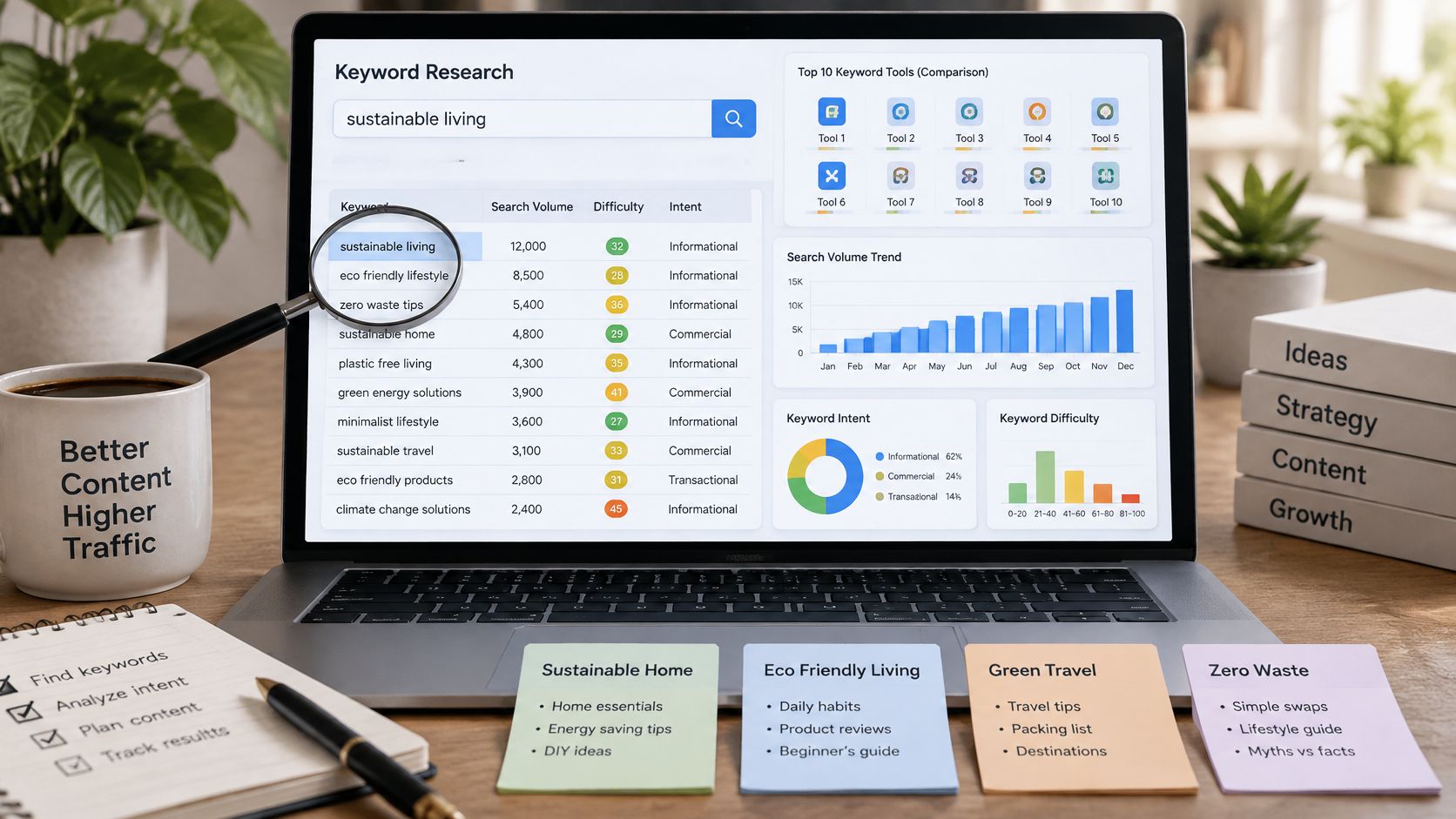
When I open a keyword overview, I'm not looking for one perfect number. I'm checking whether volume, KD, and CPC point in the same direction or whether one of them is warning me away. That's the whole value of modern keyword research metrics, they force you to compare demand, competition, and commercial intent instead of pretending those are the same thing.
Search volume tells me demand, not destiny
Search volume is best treated as an average snapshot of demand, not a promise of traffic. In SemDash, I use it to separate meaningful topics from noise, then I immediately ask whether the query is seasonal, localized, or tied to a narrow use case. A term can look generous on paper and still be poor for my audience if the demand is coming from the wrong geography or the wrong moment.
KD tells me how much resistance I'm walking into
Keyword Difficulty is usually a 0–100 estimate of how hard it will be to reach the top 10, and some tools model it from the backlink strength and authority of the pages already on page one as described in Semrush's keyword overview. I use that number as a competition signal, not as a prophecy. Two keywords can carry similar volume and ask for very different levels of link earning and content investment if one SERP is crowded with strong domains.
CPC helps me read commercial intent
I still pay attention to CPC even when I'm not buying ads. It often tells me whether a keyword sits near purchase behavior, because advertisers don't keep bidding on dead terms for long. I don't treat it as a direct ranking signal, but I do treat it as a clue that the query has business value beyond curiosity clicks.
The internal breakdown I keep handy is the one on how to check keyword difficulty, because the problem isn't using KD. It's using it without checking what kind of pages rank.
My working model: volume tells me there's a market, KD tells me how hard entry looks, and CPC hints at whether that market has commercial weight.
This is also where a screenshot can be misleading if you only stare at the columns. A clean dashboard doesn't mean a winnable opportunity. It just means the tool has organized the data well enough for you to make a better judgment.
From Search Volume to Estimated Traffic and Clicks
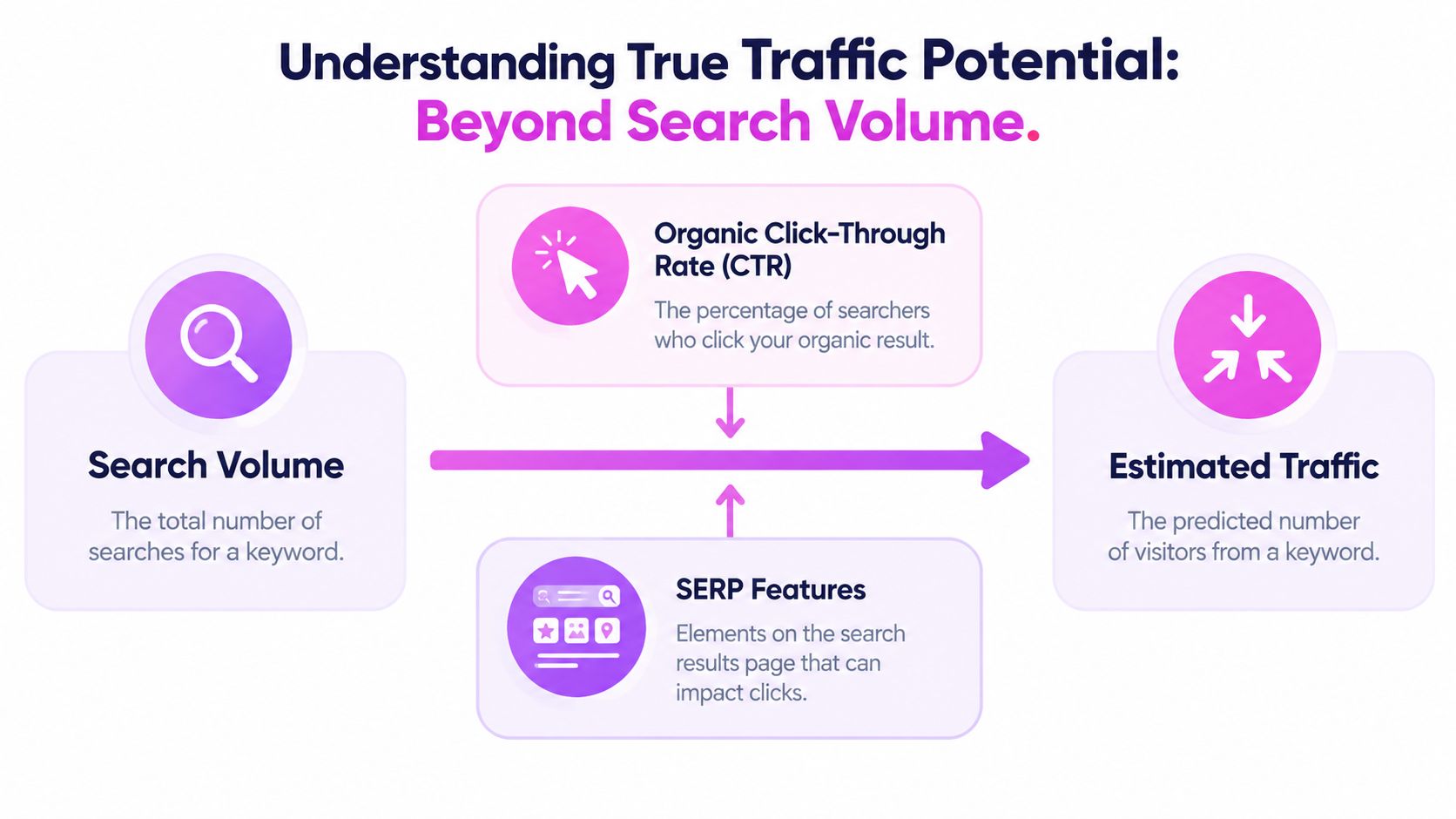
Search volume is the ceiling. Traffic is what survives after ranking position and the SERP itself take their cut. I've found the simplest forecasting model is still the most useful one, expected traffic = search volume × position-based CTR, because it forces you to stop confusing demand with deliverable visits as supported by the CTR study in this report.
Why the top of the page changes everything
Position matters because click distribution is wildly uneven. The #1 organic result averages a 27.6% click-through rate, and the top three organic results together capture about 75% of clicks according to this keyword research statistics summary. That's the reason I care so much about whether I can realistically break into the top three, not just whether I can rank somewhere on page one.
A keyword with modest volume can outperform a larger term if the SERP lets me capture a better share of clicks. A keyword with impressive volume can still be a weak opportunity if the realistic rank target is buried below the fold. The math only makes sense when position is part of the model.
SERP features can distort the forecast
Many keyword reports falter when they assume the full click pool is still waiting for organic results, which isn't always true. Featured snippets, people-also-ask blocks, and AI answers all change how much traffic is left for the blue links underneath. That's why I've stopped treating volume as a traffic forecast and started treating it as an upper bound.
If you want to pressure-test a query before you spend time on it, the traffic estimation tools overview is useful because it pushes the same logic further, from raw demand into realistic click capture.
Useful habit: if the SERP is crowded before you rank, your forecast needs to assume less organic demand, not more.
That small shift changes prioritization fast. A spreadsheet can make two keywords look close. The click model usually does not.
My Workflow for Prioritizing Keywords
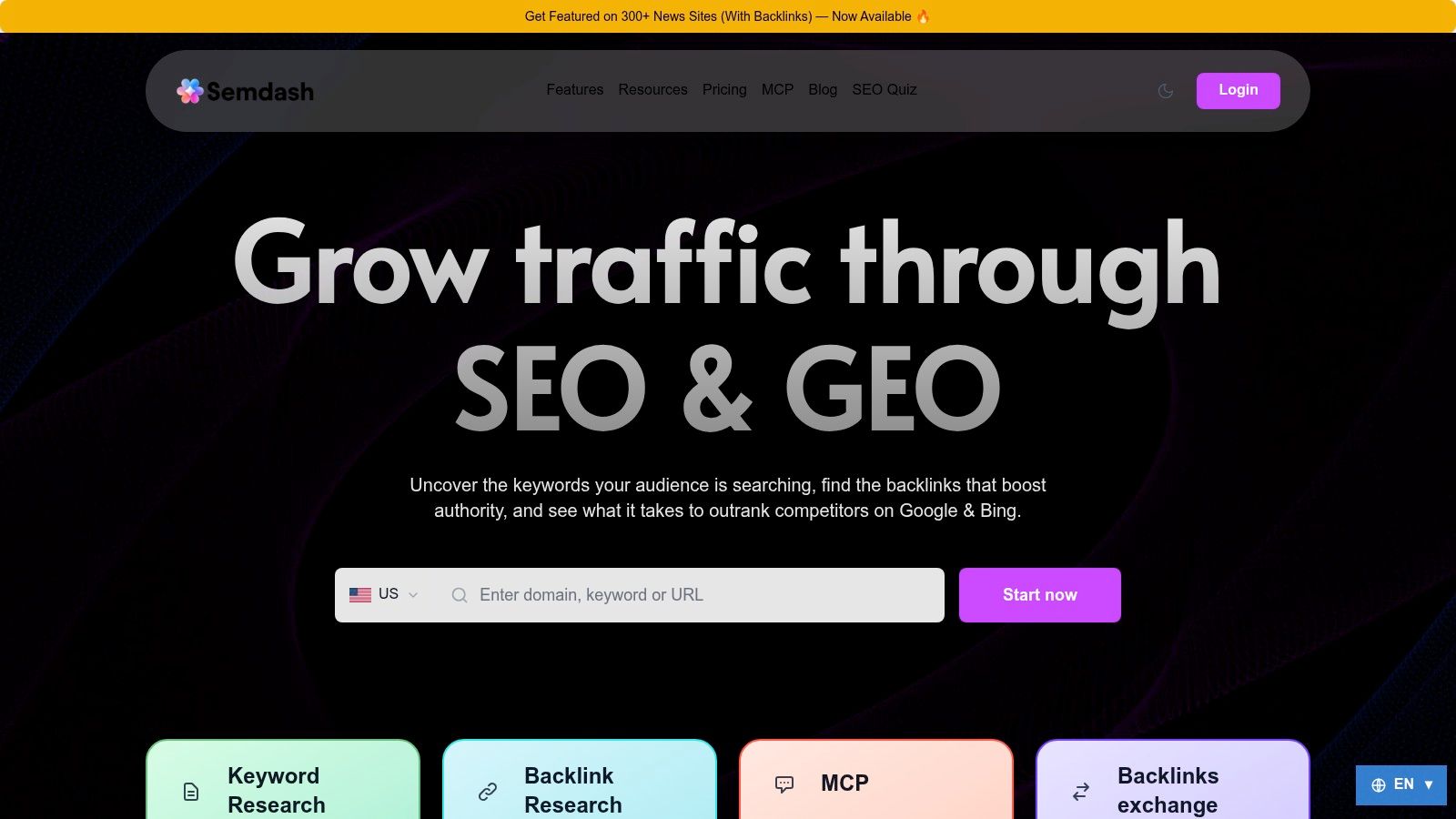
When I'm shortlisting keywords, I start by filtering for a shape I can work with, then I pressure-test the list manually. In SemDash, I usually look for terms with Volume over 500, KD under 30, and CPC above $2 when I want a mix of demand, reachable competition, and some sign of commercial value. Those thresholds aren't magic, they're just a fast way to pull a list that's worth a deeper look.
I don't stop at the filters. I sort the surviving terms by intent, then I check whether the keyword makes sense for the page I'm willing to build. A phrase can pass the numbers and still be a bad fit if the ranking pages are all product pages, or if the query is too broad for the content format I can support. The human review is where the spreadsheet becomes a decision.
What I check before I spend content budget
- Query shape: I look at whether the keyword reads like research, comparison, or purchase intent, because the page type has to match the searcher's mood.
- Ranked URLs: I check whether the current results are blog posts, category pages, tool pages, or brand homepages, because that usually tells me what Google thinks the query wants.
- Authority mix: I scan the first page for dominant brands and heavy-link pages, then decide whether I'm entering a realistic fight.
- Topical fit: I ask whether the page I'd build would be better than what's already there, not just longer.
I also keep a second window open for AI tools for keyword research when I'm comparing clustering workflows, because automated grouping can help surface patterns faster, even if I still make the final call myself.
The video below is the kind of thing I'd send to a junior strategist who keeps sorting by volume alone.
I've learned to trust the mismatch as much as the match. If volume and CPC look strong but KD is ugly and the SERP is dominated by authority sites, I move on. If volume is smaller but the intent is sharp, the competition is tractable, and the page type fits, that's often the better bet.
Going Beyond Numbers Reading the SERP for Intent
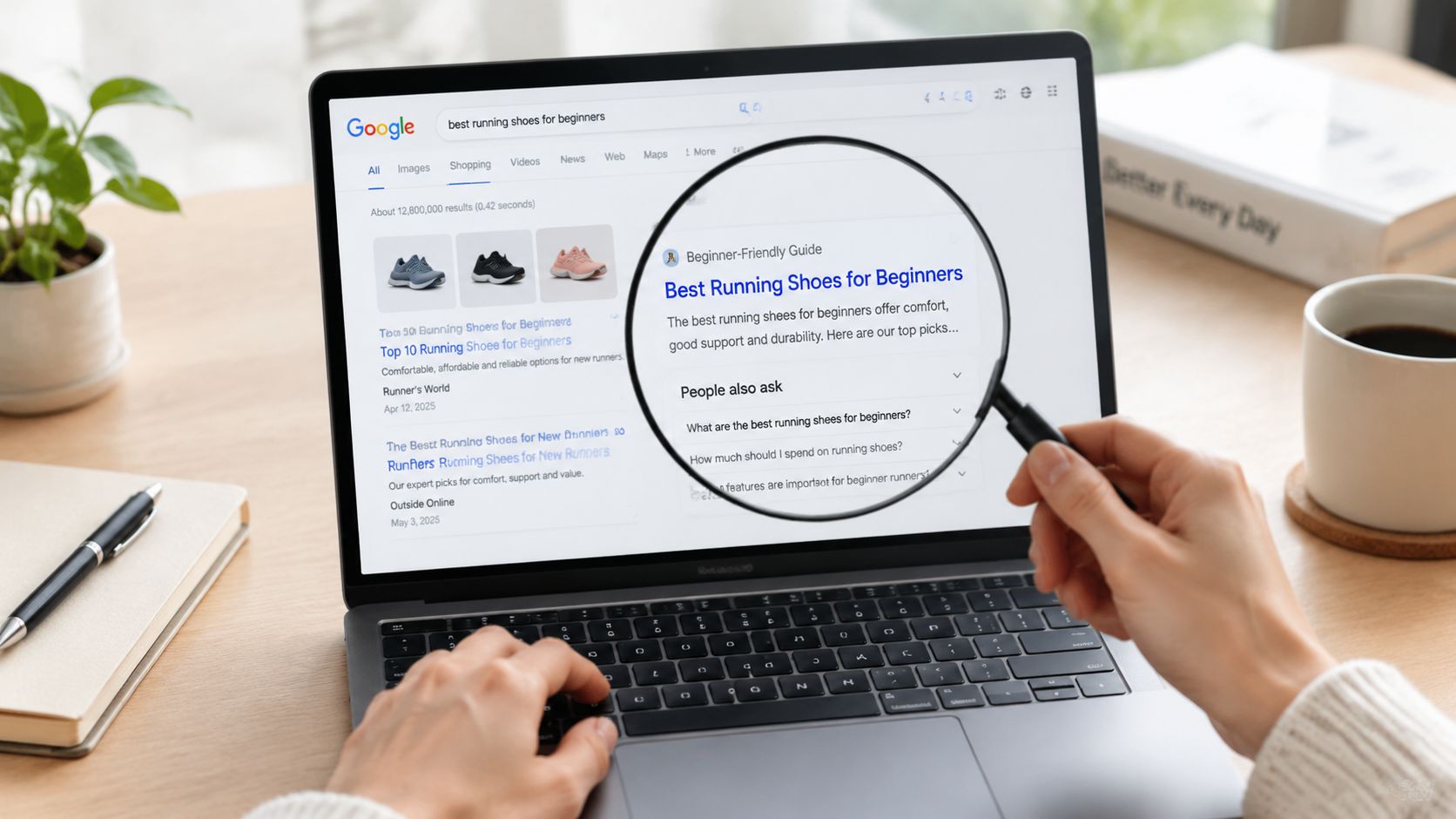
A keyword report can tell you what the market looks like on paper. The live SERP tells you what Google is rewarding today. I never sign off on a target until I've checked the result types, the authority pattern, and the presence of AI Overviews, because those details change the value of the keyword more than another point or two of difficulty ever will.
Read the page, not just the numbers
I'm looking first at intent. If the results are mostly guides, then the query is informational. If the page is filled with product pages, category pages, or comparison content, the commercial expectation is different. The formats ranking on page one tell me whether I should be writing a definition, a buying guide, a landing page, or something else entirely.
Then I look at the names. If the same large domains keep appearing, the gap is probably harder to close than the metric suggests. If the results are mixed and the pages look thin or outdated, I may have a path even when the raw score isn't flattering.
AI Overviews changed the meaning of “good” keywords
This is the part too many teams still ignore. One study found that keywords triggering AI Overviews saw an average CTR decline of 15.49%, which is exactly why I check the live SERP after the metric review in this Semrush AI Overviews study. A keyword can look excellent on volume and difficulty and still be a weak acquisition target if the answer is being synthesized before anyone reaches an organic result.
SemDash's AI Overviews visibility tracking is useful here because it lets me spot when a query is being absorbed by answer surfaces instead of traditional listings. That matters more every month, especially for informational queries where the click value can evaporate even when rankings look healthy.
The question isn't just whether you can rank. It's whether ranking still buys you the click.
I'm also more cautious with broad informational terms now. If the SERP shows heavy answer formatting, I assume I'll earn less traffic than the keyword alone implies. If the SERP still leaves room for organic comparison pages, product pages, or a sharply aligned article, I keep going. That's the kind of judgment no static metric can replace.
Building a Smarter Keyword Targeting Framework
The cleanest keyword strategy I know is simple, but it isn't simplistic. Start with discovery, filter with volume, KD, and commercial signal, then check the live SERP for intent and click loss before you commit. That sequence keeps you from mistaking a useful metric for a complete answer.
I've also stopped thinking of keyword research metrics as inputs for a single yes-or-no decision. They're diagnostic signals. They tell you whether the market is real, whether the competition is manageable, and whether the click path is still open. If one of those conditions breaks, the keyword probably isn't a win, no matter how nice it looks in the dashboard.
For teams that need to align keyword work with the newer answer-driven search space, Optimizing for AI search engines is worth reading alongside your normal SERP review process. The search surface is no longer just ten blue links, and your targeting model shouldn't pretend it is.
The real shift is mental. Once you stop chasing the biggest number and start judging the likely traffic yield, the competitive lift, and the SERP reality together, your keyword decisions get much harder to argue with and much easier to defend in planning meetings.
If you want a workflow that ties keyword volume, difficulty, SERP analysis, and AI Overviews visibility into one place, visit SemDash and use it to shortlist queries with real traffic potential instead of vanity appeal. It's built for the kind of keyword research that starts with data but ends with judgment, which is the part often overlooked.