%20(1)-B86R08ZzwhPzS6UZbG3mSxRWPCwGwn.png)


Collecting more keyword data doesn't automatically produce better content. I've watched teams export thousands of terms, build oversized spreadsheets, and still choose the wrong page type because nobody inspected the live SERP or asked whether the query represented a distinct intent. The bottleneck usually isn't discovery. It's turning evidence into a defensible page decision.
I evaluate these SEO tools for content marketing by the workflow they improve: discovery, competitive reverse-engineering, SERP inspection, clustering, briefing, optimization, publishing, measurement, or enterprise governance. My practical workflow is to discover opportunities, inspect live results and intent, cluster queries into pages, create a brief, optimize the draft, publish with editorial control, and measure both organic and AI-search visibility. That approach is more useful than choosing the platform with the longest feature list, and it helps with solving AI content scaling issues.
The right stack depends on pricing, scale, editorial judgment, data depth, and implementation effort. A solo consultant may need one broad research platform and a lightweight writing layer. A global team may need governance, crawling, permissions, and regional monitoring. Here are the ten platforms I'd put through a content workflow, with the trade-offs I'd test before committing.
Table of Contents
- 1. SemDash
- 2. Semrush Content Toolkit
- 3. Ahrefs
- 4. Moz Pro
- 5. Surfer
- 6. Clearscope
- 7. MarketMuse
- 8. Frase
- 9. Conductor
- 10. SISTRIX
- Top 10 SEO Tools for Content Marketing, Comparison
- Build a Stack Around Decisions, Not Dashboards
1. SemDash
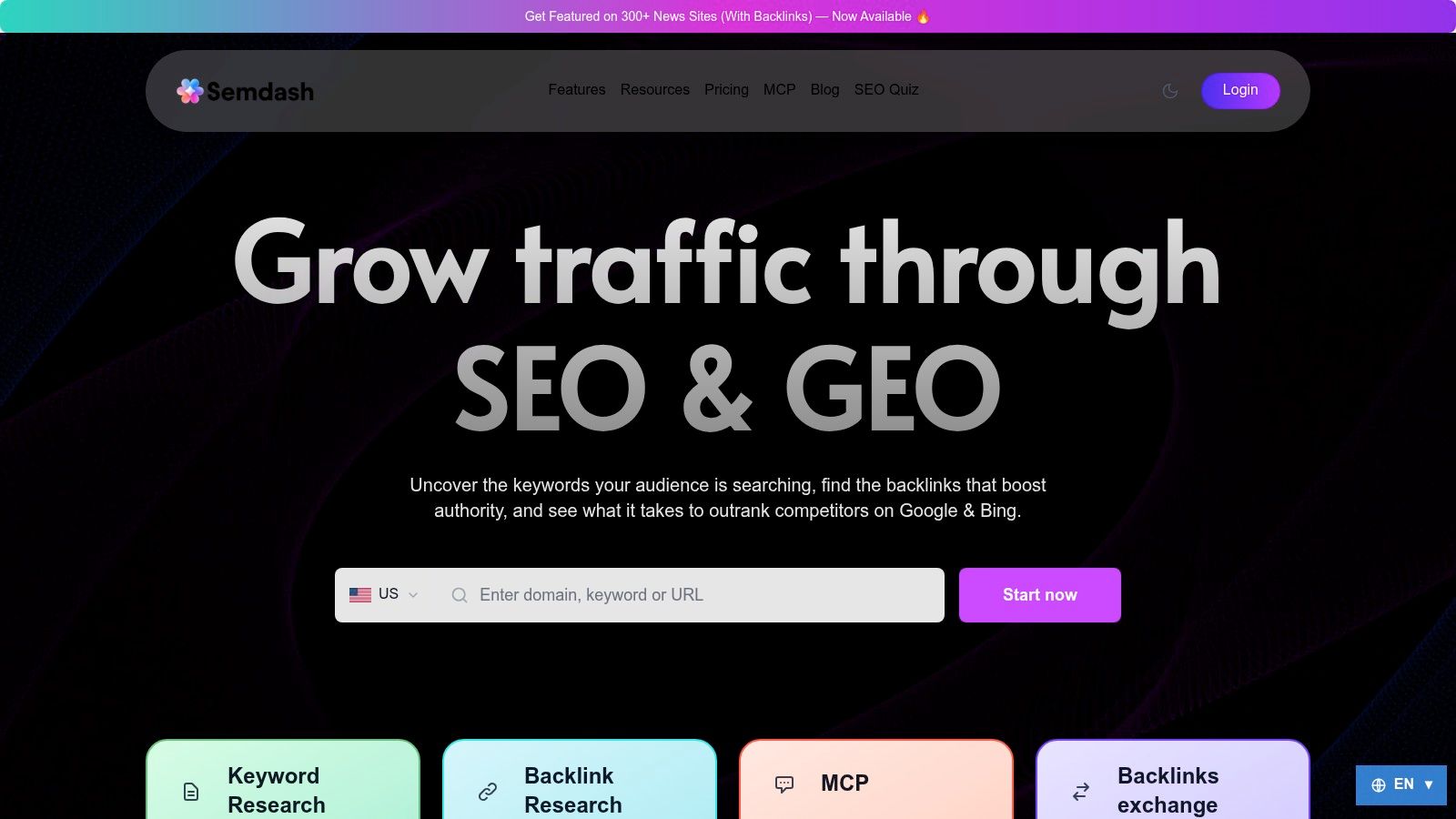
SemDash fits workflows where competitor research must become a page-level content decision quickly. Instead of moving between separate keyword, backlink, SERP, and AI-search platforms, I can inspect a competitor domain, open the ranking URL, review the result pattern, and record the opportunity in one workspace. That reduces research handoffs, although it does not remove the need for editorial review.
Where SemDash improves the workflow
For example, when auditing a competitor's blog, I open Domain Keywords, map queries to individual URLs, and isolate the pages with the largest traffic share before building briefs. Top Pages and Traffic Share show which assets deserve attention first. Keyword Gap and Backlink Gap then help distinguish a missing topic from a page that also needs authority support. I would export only the priority URLs, not an entire keyword database, so the content team receives a manageable brief queue.
Long-tail suggestions, People Also Ask, People Also Search, intent classification, and clustering extend that research into outline preparation. The 12-month SERP history helps determine whether a topic calls for a refresh, consolidation, redirect, or new asset. I still inspect current results manually, because historical patterns can miss a recent change in intent or page type.
SemDash tracks AI Overviews, including triggering keywords, domain mentions, and the URLs cited. Its connection to Claude or ChatGPT through MCP can support structured research workflows, but the output should remain an input rather than the final brief. An SEO or editor needs to check the source pages, confirm the interpretation, and set the argument, examples, and point of view.
Practical rule: Use SemDash to identify the page and intent to act on. Let the writer and editor decide what the page should contribute.
The platform also supports authority work alongside content planning. Unlinked mentions, broken-backlink workflows, referring-domain analysis, anchor review, and competitor backlink gaps can reveal reclamation tasks related to a new or refreshed page. The optional service for placement on 300+ news sites belongs to acquisition planning, so I would assess relevance and editorial quality separately rather than treating it as a replacement for earned links.
SemDash offers a free tier and free trial. Paid limits are shown on its pricing pages, so I would test export allowances, project capacity, and historical access before budgeting. It is positioned as a cost-effective alternative to Ahrefs and Semrush, while reports of smaller keyword pulls for some queries and requests for bulk multi-domain analysis are reasons to validate it against priority markets. The simplified interface, public roadmap, SEO Academy, YouTube resources, free live calls, and support in English, German, Polish, and Spanish can shorten onboarding. Manual SERP checks should still control publishing decisions.
2. Semrush Content Toolkit
Semrush Content Toolkit is built for teams that want a guided path from topic discovery to brief creation, drafting, optimization, and reporting. Topic Finder helps generate ideas, while the SEO Brief Generator and AI content optimization features turn those ideas into working instructions for writers. Brand-voice writing and Content Boosts are useful when the team has a repeatable editorial process but doesn't want every writer starting from a blank document.
I'd choose it when a company already uses Semrush or expects to expand into its broader SEO ecosystem. The modular setup lets a small team start with content functions and add reporting through Base or Pro Report options as stakeholder needs grow. A 7-day free trial is available, which gives me enough time to test whether the briefs reflect actual SERP intent rather than just producing longer outlines.
The limitation I'd test first
The content plan can feel narrow for a team with heavy production needs. Boost and article limits may push larger teams toward add-ons, and the standalone content experience won't replace deep technical SEO or broad competitor research. That's why I'd avoid buying it as the only platform unless the team's main problem is editorial execution inside the Semrush environment.
For a more independent research workflow, I'd compare its outputs with SemDash's Semrush alternatives guide. The key quality check is simple: take a proposed topic, inspect the current result types, and verify that the recommended outline matches the audience's task. A content score or generated brief can speed production, but it can't decide whether a comparison page, tutorial, category page, or concise answer block is the right asset.
3. Ahrefs
Ahrefs remains one of my preferred platforms for competitive reverse-engineering, particularly when backlinks, ranking pages, and content gaps need to sit in the same investigation. Site Explorer gives me a useful view of competitor content and link profiles, while Keywords Explorer adds clustering, intent signals, and SERP context for topic expansion. The workflow is especially strong when I'm asking, “Which pages already attract demand, authority, and related queries?”
Why I'd use it for opportunity sizing
Ahrefs is excellent for comparing several competitors against an owned domain and separating broad topic ideas from pages with a realistic competitive path. Content Gap and Keyword Gap help reveal terms competitors rank for, but I don't publish directly from the export. I first filter for relevance, inspect the ranking URLs, and check whether the SERP supports the same page type my site can credibly create.
The platform has also expanded into AI search and includes an AI Content Helper, along with visibility-related features. That makes it more useful for teams tracking how content performs beyond traditional blue links, although I'd still keep first-party data in the decision loop.
Competitor data shows what another site appears to win. Owned performance data shows what your audience already expects from your site.
The trade-off is cost and usage control. Pricing is sensitive to credits, users, and feature access, so a large team can outgrow the initial plan quickly. Advanced functions may require higher tiers, and third-party traffic estimates shouldn't override Search Console or analytics data. For teams considering a different balance of cost, interface, or workflow consolidation, compare the platform with SemDash's Ahrefs alternatives guide.
4. Moz Pro
Moz Pro works well when writers need clear page-level recommendations without learning a complicated research interface. Its On-Page Grader turns a target query and URL into practical optimization suggestions, while Keyword Suggestions by Topic, rank tracking, and site audits support the surrounding workflow. Moz now includes AI Overviews, AI Visibility Dashboards, Prompt Tracking, and AI Content Briefs on applicable tiers.
I'd put Moz Pro in front of a content team that wants a gentle bridge between editorial work and basic SEO operations. The interface is approachable, and published tier limits make procurement easier than sales-led platforms. It's also useful when the same person owns content updates, rankings, and routine audits.
Where it falls short
For large-scale competitor research, I generally expect lighter keyword and link depth than Ahrefs or Semrush. Some data areas also update weekly, which may feel slow when the team works in a fast-moving category or needs to investigate a sudden SERP change. I'd use Moz for recommendations and monitoring, then verify difficult opportunities against current results and owned data.
The mistake I'd avoid is treating the On-Page Grader as a writing rubric. It can identify missing coverage or page-level issues, but it can't tell whether the draft has original expertise, a useful product comparison, or a credible answer to a difficult customer question. Give writers the recommendations as a review layer, not as a formula they must satisfy mechanically.
5. Surfer
Surfer is most useful at the optimization stage, after I've already selected the page, intent, and editorial angle. Its Content Editor compares a draft with ranking competitors and provides NLP and term guidance, while Content Audit and Auto-Optimize support updates to existing pages. SERP Analyzer and rank tracking are available through relevant plans or add-ons.
What it gets right
Writers get actionable feedback inside the document rather than a detached spreadsheet. That makes Surfer effective for tightening topical coverage, spotting obvious omissions, and speeding revisions across a team. It can support solo creators as well as larger editorial groups, with API and white-label options for more structured agency workflows.
I've found the tool works best when the brief already contains decisions that the score cannot make. The writer needs to know the audience, page purpose, differentiator, evidence standard, and conversion path before opening the editor. Otherwise, the draft tends to chase competitor vocabulary instead of improving the answer.
A content score is a diagnostic signal. It isn't a quality target.
The main trade-off is packaging. Pricing and feature access vary by plan and add-on, so SERP Analyzer and tracking may require additional spend. Content scores can nudge inexperienced writers toward formulaic output. I'd review every recommendation for redundancy, forced terminology, and claims that don't belong in the article. Surfer should shorten the revision cycle, not replace an editor.
6. Clearscope
Clearscope is designed around a writer-friendly optimization experience. I'd use it when an editorial team needs consistent guidance on subtopic coverage, readability, and intent, but doesn't want writers wrestling with a broad technical SEO suite. Content grading, competitive coverage, Topic Explorer, and briefing workflows keep the focus on producing and improving pages.
Its Prompt Tracking and brand visibility features extend the workflow into search and AI discovery. That's useful for organizations that need to monitor whether their content or brand appears for strategically important prompts, but I'd treat visibility tracking as a measurement layer rather than proof that the content deserves expansion.
The enterprise editorial trade-off
Unlimited users and projects on paid tiers can simplify rollout across a large team. Editors can distribute reports without forcing every contributor to buy a separate seat, and the interface is clear enough for writers who aren't SEO specialists. The limitation is cost. Clearscope has a higher entry point than several alternatives and remains focused on briefing and on-page optimization rather than technical auditing, crawling, or complete competitor intelligence.
I'd also impose a stop rule on optimization. Once a page covers the core task clearly, adding every suggested term can make the prose worse. Review the terms for meaning, not presence. A relevant concept belongs in the page only when it helps the reader understand, compare, decide, or act.
7. MarketMuse
MarketMuse is the strategic option for teams managing a large content inventory and trying to build topical authority deliberately. Topic Navigator, SERP X-Ray, Heatmap, and Site Heatmap help identify subtopics, weak coverage, and relationships between existing pages. I'd use it when the question is not “What keyword should we target?” but “Which content cluster should we strengthen next, and where is the site thin?”
From inventory to publishing decision
MarketMuse supports several brief formats, including Article, FAQ, How-to, and Product Review. That matters because format gaps often create more useful opportunities than another list of synonymous terms. If a site has explanatory articles but no comparison or implementation content, a format-aware brief can expose that weakness.
The platform's strength also creates its main limitation. Setting up inventories, defining topics, and aligning the outputs with editorial operations takes work. Optimize, Research, and Strategy pricing is guided through sales rather than fully published, so I'd require a workflow demonstration using my own site before making a commitment.
I wouldn't use MarketMuse as an automatic content calendar. I'd combine its coverage analysis with Search Console queries, conversion data, current SERP inspection, and cannibalization checks. A topic may look strategically important but still deserve a refresh or consolidation rather than another URL. The tool helps map the decision. It doesn't make the decision for me.
8. Frase
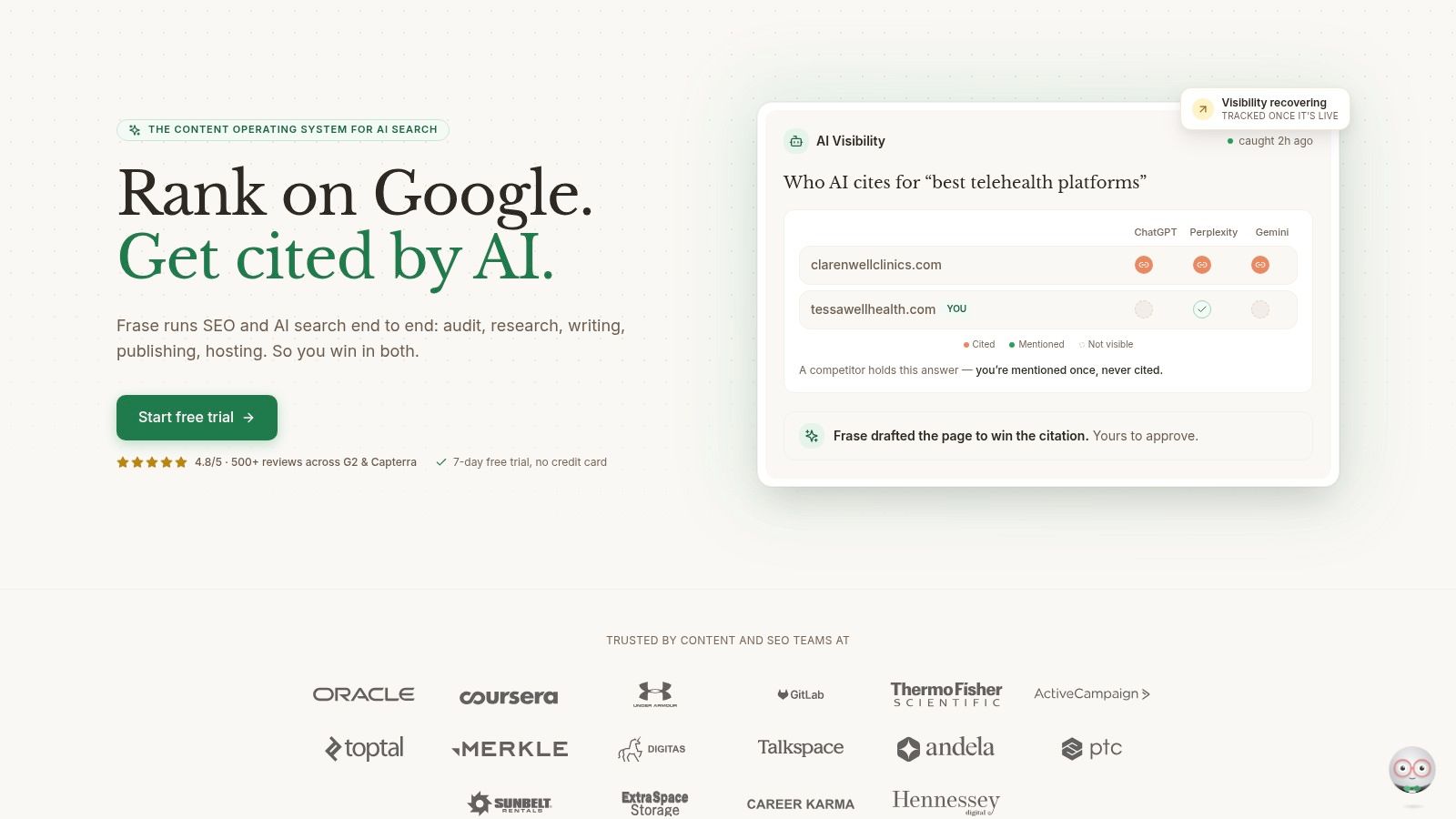
Frase is built for lean teams that want a connected research, drafting, optimization, audit, and publishing loop. The sequence is straightforward: research the SERP, draft with brand-voice support, optimize the article, monitor performance, and publish through supported CMS options or FraseCMS. Content Guard watches for slipping pages and can help draft fixes.
That workflow is attractive when a small team has more updates than editors. Content calendars and internal-linking suggestions on higher tiers can reduce the administrative work around publishing, while AI Visibility tracking covers ChatGPT, Google AI, Perplexity, and other systems.
Automation needs a hard editorial gate
The usage-based limits are clear, with boundaries around articles, audit pages, sites, and seats. That makes planning easier than an unclear credit system, but it also means production-heavy teams need to model usage carefully. White-label portals and domains are Enterprise-only, which matters for agencies presenting the platform as part of a client service.
I'd never allow automated drafting to move directly to publication. The process needs factual review, brand review, source verification, internal-link review, and a check that the page still answers the intended query. Auto-publishing can remove a bottleneck, but it can also scale an editorial mistake. Frase is most effective when automation handles repetitive preparation and a subject-matter expert owns the final page.
9. Conductor
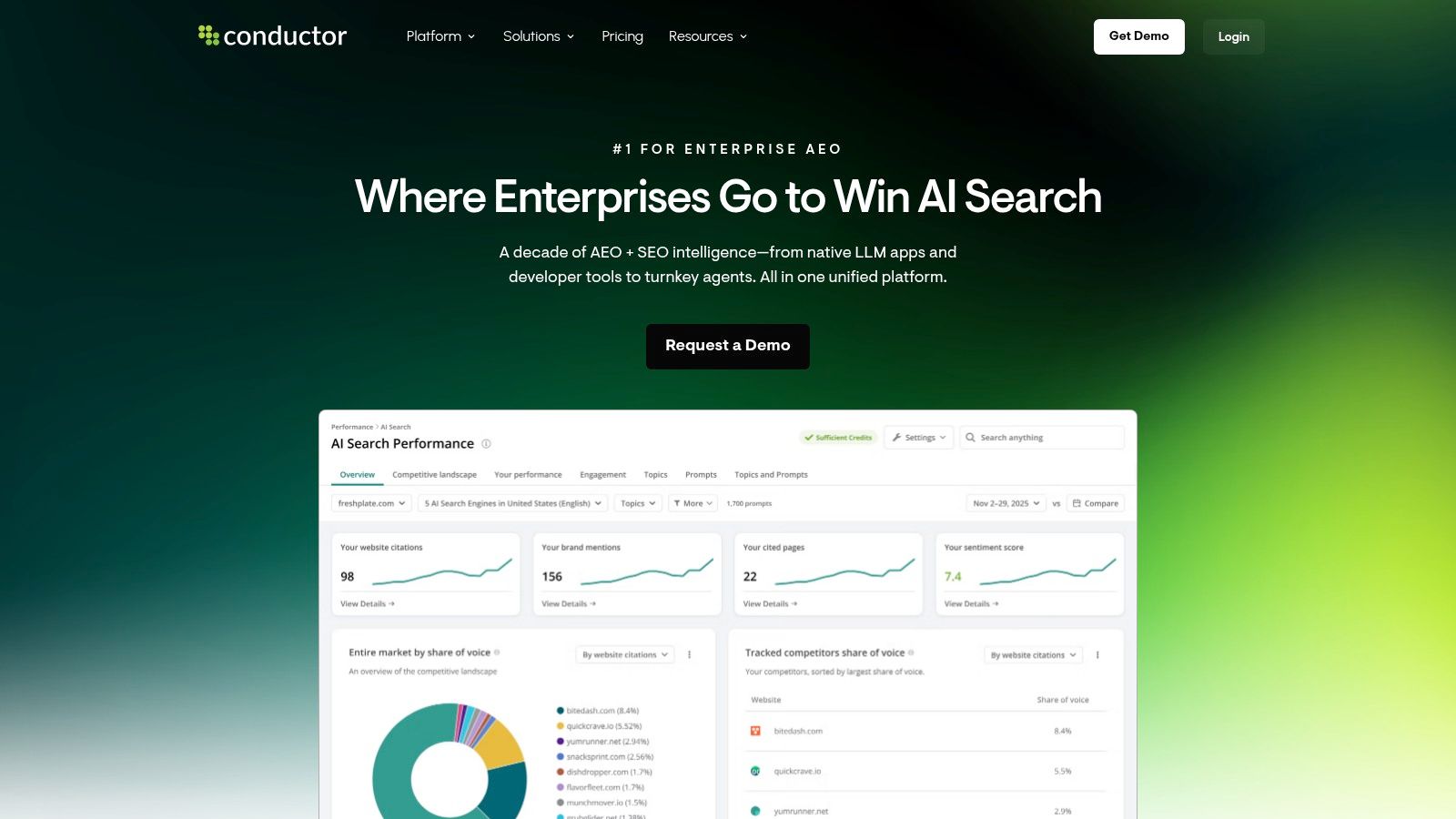
Conductor is aimed at enterprise teams that need SEO and Answer Engine Optimization across multiple sites, regions, stakeholders, and governance requirements. Its Creator, Intelligence, Monitoring, and AgentStack modules cover content intelligence, creation, monitoring, and reporting. AI Search Credits, large-scale crawling, keyword tracking, continuous monitoring, and multi-site management suit organizations where visibility operations are too broad for a small standalone editor.
Governance is the buying reason
I'd shortlist Conductor when the problem includes permissions, SSO, stakeholder reporting, regional rollout, and ongoing oversight. The usage-based model can align the cost with consumed capability instead of relying only on seat counts, which is useful when many teams participate in the workflow.
The downside is procurement friction. Pricing is sales-scoped and not self-serve, so smaller teams can spend time evaluating a platform that offers more governance than they need. It's also excessive if the only requirement is on-page guidance for a few writers.
The implementation test should use real governance scenarios. Ask how the team will approve briefs, monitor AI-search visibility, separate regional data, and report changes to executives. Enterprise SEO tools earn their place by making decisions repeatable and accountable. If the team won't use those controls, a lighter platform will usually produce a cleaner workflow.
10. SISTRIX
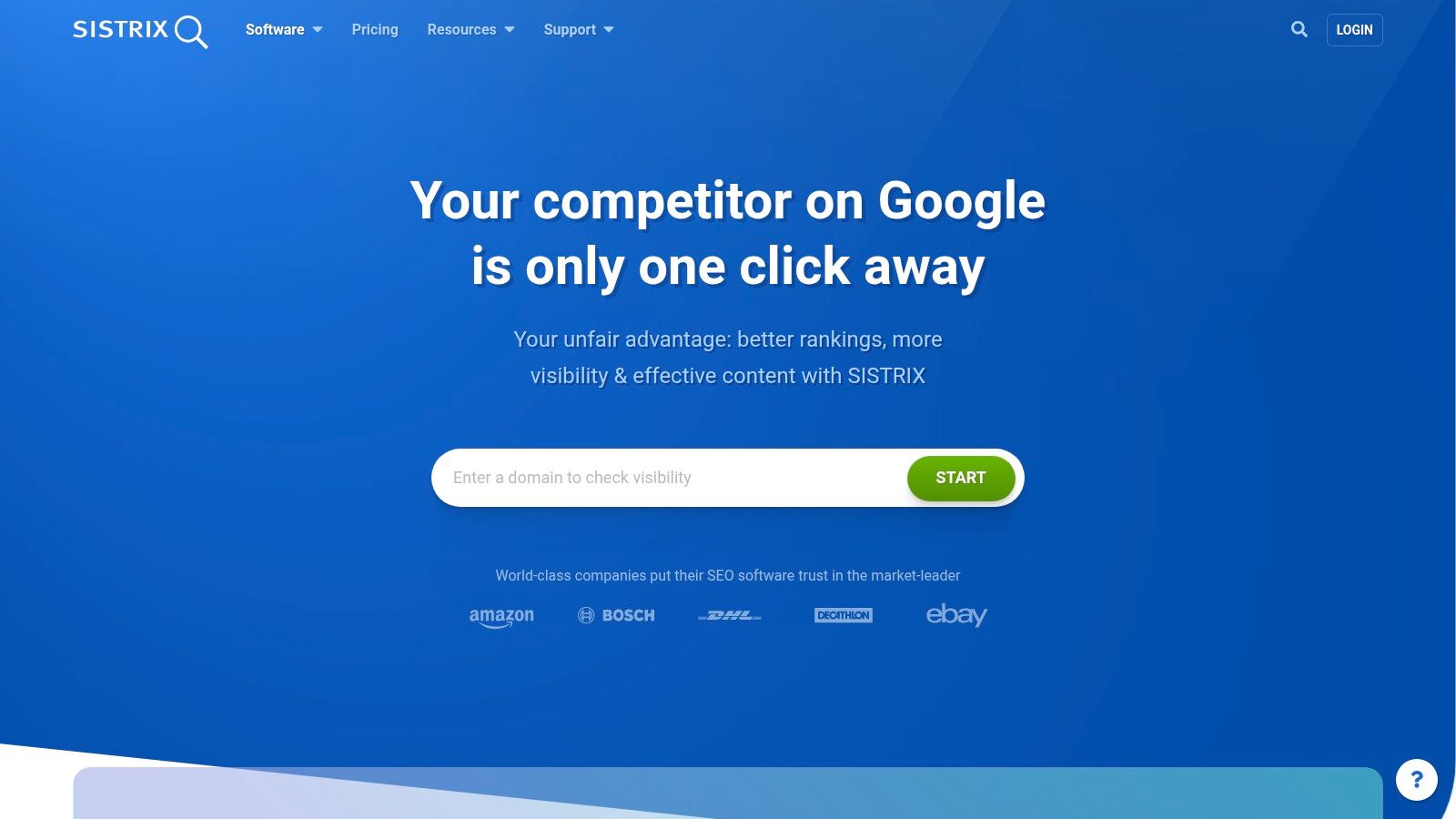
SISTRIX is a strong choice for long-view visibility analysis, especially for European and international teams. Its Visibility Index and historic SERP data help me see whether a site's presence is improving, declining, or changing across a broader time horizon. Content marketing and text optimization tools are available through the relevant packages, while API access and Prompt Tracking support more advanced workflows.
Why historical context matters
A current rank snapshot can hide a major intent or visibility shift. Historic SERP data lets me investigate whether a page lost visibility because competitors improved, the result format changed, demand moved, or the query stopped rewarding the same page type. That context makes content refresh decisions more defensible.
SISTRIX's modular structure is helpful when I want to buy the functions a team uses rather than a large all-in-one suite. Pricing is presented in EUR with monthly cancellation, which is transparent, but US-centric teams may need time to adjust to the interface, terminology, and taxonomy. Prompt Tracking for AI models is in beta, so I'd validate its coverage and reporting depth against the team's target markets before making it a central measurement source.
I'd pair SISTRIX with a primary research platform and owned analytics rather than asking it to manage every stage. Its best contribution is historical visibility context. That's valuable during quarterly planning, content pruning, and international comparisons, but it shouldn't replace manual SERP review or page-level performance analysis.
Top 10 SEO Tools for Content Marketing, Comparison
| Tool | Core features | Unique selling points ✨ | Best for 👥 | Value & quality (💰 / ★) |
|---|---|---|---|---|
| SemDash 🏆 | 6.6B keywords, 2.7T backlinks, 12‑mo SERP history, URL-level mapping, AI briefs | AI Overviews (citation tracking), unlinked-mention recovery, backlink-exchange, fast UI ✨ | Agencies, in-house growth teams, consultants, solopreneurs 👥 | 💰 Budget-friendly; ★★★★☆ |
| Semrush – Content Toolkit | Topic Finder, SEO brief generator, content optimization, reporting | Modular pricing + deep Semrush ecosystem integration ✨ | Content teams & agencies scaling content ops 👥 | 💰 Transparent/modular; ★★★★ |
| Ahrefs | Keywords Explorer, Site Explorer, backlink index, content/gap analysis | Industry-leading backlink & keyword datasets, precise SERP context ✨ | SEOs needing deep competitive & backlink research 👥 | 💰 Premium; ★★★★★ |
| Moz Pro | On-page grader, keyword suggestions, rank tracking, audits | Approachable UX, clear tiers, AI overviews & briefs ✨ | SMBs and content teams wanting actionable on-page guidance 👥 | 💰 Mid; ★★★★ |
| Surfer | Content Editor, Content Audit, SERP Analyzer (add-on) | Strong content scoring & auto-optimize workflows for writers ✨ | Writers, content teams focused on on-page optimization 👥 | 💰 Mid (add-ons); ★★★★ |
| Clearscope | Content grading, topic explorer, briefs, intent/readability guidance | Writer-friendly UI, unlimited users/projects on paid tiers ✨ | Enterprise editorial teams & agencies prioritizing writer UX 👥 | 💰 Higher; ★★★★☆ |
| MarketMuse | Topic Navigator, SERP heatmaps, content briefs, site heatmap | Deep topical authority modeling and subtopic discovery ✨ | Strategy-led teams mapping authority & content inventories 👥 | 💰 Enterprise-tier; ★★★★ |
| Frase | Research → Draft → Optimize loop, AI visibility, CMS publishing | Content Guard (decay detection), multi-AI visibility tracking, publish automation ✨ | Lean teams, publishers automating editorial workflows 👥 | 💰 Usage-based; ★★★★ |
| Conductor | Creator, Intelligence, Monitoring, AgentStack modules; large-scale crawling | Enterprise governance, multi-site/region AEO & 24/7 monitoring ✨ | Large organizations needing scale, governance, SSO 👥 | 💰 Enterprise (sales); ★★★★ |
| SISTRIX | Visibility Index, historic SERP data, content optimization tools | Strong EU historic datasets, transparent EUR pricing, API access ✨ | European & international teams focused on long-term visibility 👥 | 💰 Mid (EUR); ★★★★ |
Build a Stack Around Decisions, Not Dashboards
I wouldn't choose a universal winner from this list. I'd choose the platform that removes the most expensive bottleneck in my current workflow. If I need one primary source for competitor keywords, URL-level ranking pages, backlink opportunities, SERP history, and AI Overview visibility, SemDash is a practical starting point. Ahrefs remains compelling for deep competitive and backlink research. Semrush Content Toolkit fits teams already invested in the Semrush ecosystem and focused on structured editorial production.
For briefing and topic authority, MarketMuse gives strategic depth, while Clearscope and Surfer make optimization easier for writers. Frase is better suited to teams that want research, drafting, auditing, and publishing connected in one operational loop. Moz Pro is approachable for teams that need page recommendations alongside rank tracking and audits. SISTRIX becomes especially useful when historic visibility and international analysis matter. Conductor belongs in the enterprise conversation when governance, multi-site monitoring, and Answer Engine Optimization are central requirements.
The stack should stay deliberately small. One platform should own keyword and SERP decisions. Add a clustering or briefing layer only when it improves page choices or reduces editorial rework. Add optimization software when writers use its recommendations. Add monitoring when someone has a defined response process for declines, intent shifts, AI citations, or competitor changes.
More exports don't equal more strategy. Better page decisions do.
I validate every recommendation manually. I open the live SERP, compare ranking URLs, inspect result formats, review People Also Ask questions, and decide whether the query belongs to an existing page or a new asset. I cluster by SERP similarity, not vocabulary alone. If the same URLs repeatedly rank for related queries, one page may satisfy the task. If the results diverge by intent, depth, or journey stage, forcing the terms together creates a weak page and possible cannibalization.
I also prioritize owned data over competitor exports. Search Console and analytics reveal queries where my pages already earn impressions, near-page-one visibility, or meaningful engagement. Competitor gaps are useful for discovery, but they can include irrelevant terms, mismatched page types, or opportunities my site has no reason to pursue. The question I want answered is not merely which keywords a competitor ranks for. It's which demand my own site has already attracted and how I can expand it without creating overlapping pages.
AI search adds another quality-control layer. Google AI Overviews appeared in 13.14% of U.S. desktop queries in March 2025, up from 6.49% in January, according to The Digital Elevator's coverage of content marketing trends. A page can therefore rank traditionally and still lose attention if it doesn't provide the right answer shape. An independent analysis found an average of 4.2 citations per AI Overview, with a range of 2 to 9 and a median of 4, while only 8% cited more than seven domains. The same analysis reported that schema-marked-up pages were cited 2.3 times more often than unstructured equivalents, so I'd include source clarity, useful definitions, concise answer blocks, and appropriate structured data in the publishing review, not just keyword coverage. (Digital Applied's AI Overview citation study)
Classic ranking is not enough to measure this work. One large analysis found that only 38% of pages cited in Google AI Overviews also ranked in the top ten for the same query, with the remaining cited pages appearing elsewhere in the ranking range or beyond it. (DesignRush's summary of the Ahrefs analysis) I'd track the exact cited URL, not just the domain, and I'd review whether the page answers the query clearly enough to be selected.
The final measurement should be operational. Did the team choose better pages? Did refreshes address a real intent shift? Did writers receive a brief they could use? Did the published page earn relevant impressions, clicks, conversions, or AI citations? If a tool produces more spreadsheets but doesn't improve those decisions, it's adding activity rather than value.
SemDash brings keyword discovery, competitor reverse-engineering, URL-level SERP analysis, backlink research, clustering, AI-assisted briefs, and AI Overview citation tracking into one workspace for content teams. Start with the free tier or trial, test it against a real content opportunity, and visit SemDash to build a stack around the decisions your workflow needs most.